
The Best Ankle Braces for Padel Players.
Padel is a lateral sport. Every point involves sharp direction changes, lunges, and explosive pivots — all on an ankle joint that was never designed for this kind of load. Rolling your ankle on court is one of the most common padel injuries, and once it happens, it tends to happen again. The right ankle brace can reduce that risk. But the wrong one — or wearing one when you don’t need it — can create a false sense of security. This guide helps you choose based on your ankle injury phase, not marketing claims.
We’ve tested ankle braces during real padel sessions — from the first week back after a sprain through full competitive play. This guide is built from that experience.
In short: this guide covers the best options for Best Padel Ankle Braces 2026: Support for Sprains, Instability Return to Play, who each product suits, and what to look for. All prices are in EUR from amazon.de.
We’ve dealt with ankle sprains first-hand. The frustration of sitting out, the fear of your first lateral lunge back on court, the uncertainty about whether a brace actually helps or just makes you feel better. This guide comes from that experience — not from brand partnerships.
An ankle brace helps protect — it does not rebuild. The best long-term fix is still rehab, balance work, and progressive loading.
Our Top Picks at a Glance
Five ankle braces compared for different injury phases and support levels
| Brace | Type | Price | |
|---|---|---|---|
| ASO Ankle Stabilising Brace Best Overall | Lace-Up | €€ | Check availability → |
| Aircast AirGo Ankle Splint Maximum Protection | Semi-Rigid | €€€ | Check availability → |
| McDavid Ankle Support 195 Chronic Instability | Lace-Up + Stays | €€ | Check availability → |
| Zamst A2-DX Pro-Level Stability | Semi-Rigid Pro | €€€ | Check availability → |
| Sleeve Stars Ankle Brace Light Support | Compression + Strap | € | Check availability → |
We also review POWERLIX, Bauerfeind, and ICEHOF Cooling Pads below for budget, premium, and recovery use cases.
Which Ankle Support Do You Actually Need?
Match the brace to your injury phase — not the marketing
Your Recovery Phase Determines Your Brace Type
Recent sprain (0–4 weeks)
You need rigid or semi-rigid support. The ligaments are still healing and cannot resist inversion force on their own. An Aircast-style splint or the Zamst A2-DX provides maximum mechanical protection during this phase.
This is not the time for compression sleeves. You need something that physically stops your ankle from rolling.
Repeated sprains / chronic instability
A lace-up brace with stays is your best option. The ASO or McDavid 195 mimics athletic taping and provides strong lateral support without the bulk of a rigid splint. These are what most physios recommend for return to sport.
You should be doing rehab alongside — the brace is a bridge, not a destination.
Mild instability / confidence issues
Compression with a strap can be enough. The Sleeve Stars or a similar strap-based sleeve gives proprioceptive feedback and mild support. Good for players who feel “weak” but haven’t had a recent acute injury.
If you’re still rolling your ankle in one of these, you need to step up to a lace-up.
Recovery phase (post-match / post-sprain)
Ice and elevation, not a brace. The ICEHOF cooling pads or similar cold therapy tools are for swelling management after activity. This is a recovery tool — it does not replace a playing brace.
Pair this with progressive rehab and balance work to rebuild strength.
Maximum Support
Semi-rigid splints. Best for acute sprains. Limits mobility significantly — expect reduced agility.
Strong Support
Lace-up braces with stays. Best for chronic instability. Good balance of protection and movement.
Light Support
Compression + strap. Best for mild instability. Most mobility, least protection.
Will It Fit in My Padel Shoe?
Shoe fit changes everything about brace comfort
Brace + Shoe Compatibility
The best ankle brace in the world is useless if it doesn’t fit inside your shoe comfortably. Here’s what we’ve found from real testing.
Lace-up braces (ASO, McDavid)
Fit inside most padel shoes without sizing up. Slim profile. May feel snug in very narrow shoes like some ASICS models — but generally no issue. This is the most shoe-compatible brace type.
Semi-rigid splints (Aircast, Zamst)
These are bulkier. You may need to go half a size up in your padel shoes, or choose a wider-last shoe like NOX. ASICS narrow fits can be too tight with a rigid splint inside. Test before playing.
Compression sleeves (Sleeve Stars, POWERLIX, Bauerfeind)
No shoe fit issues. These are thin enough to fit in any padel shoe without adjustment.
The 8 Ankle Braces We Recommend
Honest reviews for every injury phase — from acute protection to recovery
ASO Ankle Stabilising Brace

The ASO is the gold standard lace-up ankle brace — and the one most physiotherapists recommend for return to sport. The figure-8 strapping system mimics athletic taping, providing strong inversion and eversion control without the bulk of a rigid splint. It fits inside most padel shoes without sizing up, which is rare for a brace with this level of support. We’ve worn it through full padel sessions and it stays put, doesn’t bunch, and doesn’t create pressure points. The best balance of support and comfort in any brace we’ve tested. One honest note: it’s not for the acute phase with active swelling. If your ankle is still puffy, you need a rigid splint first, then step down to the ASO.
- Figure-8 strapping mimics athletic taping
- Fits inside most padel shoes without sizing up
- Strong lateral support without rigid bulk
- Breathable — comfortable during long sessions
- Most recommended by physiotherapists
- Not suitable for acute phase with active swelling
- Less protective than a semi-rigid splint
- Lacing takes longer than slip-on options
- Support loosens slightly over a long session
Aircast AirGo Ankle Splint

The Aircast AirGo is the brace you wear when you need maximum mechanical protection — typically in the first 2–4 weeks after a significant ankle sprain. The semi-rigid shells physically block inversion, and the air cells inside cushion the malleoli (ankle bones). It’s the closest thing to a walking boot that still lets you move on court. Players we spoke to used it during early return-to-play sessions and it genuinely prevented involuntary rolling during lateral slides. The trade-off is real: it’s bulky. In tight padel shoes, especially narrow ASICS models, it can feel cramped. You may need to go half a size up or switch to a wider shoe. This is not a long-term playing brace — it’s a recovery-phase tool that lets you get back on court sooner than without any support.
- Maximum inversion protection
- Air cells cushion ankle bones
- Best for first 2–4 weeks post-sprain
- Can enable earlier return to court
- Clinically validated design
- Bulky in tight padel shoes
- May need half size up in shoes
- Not comfortable for extended regular play
- Reduces agility noticeably
- Premium price point
McDavid Ankle Support 195
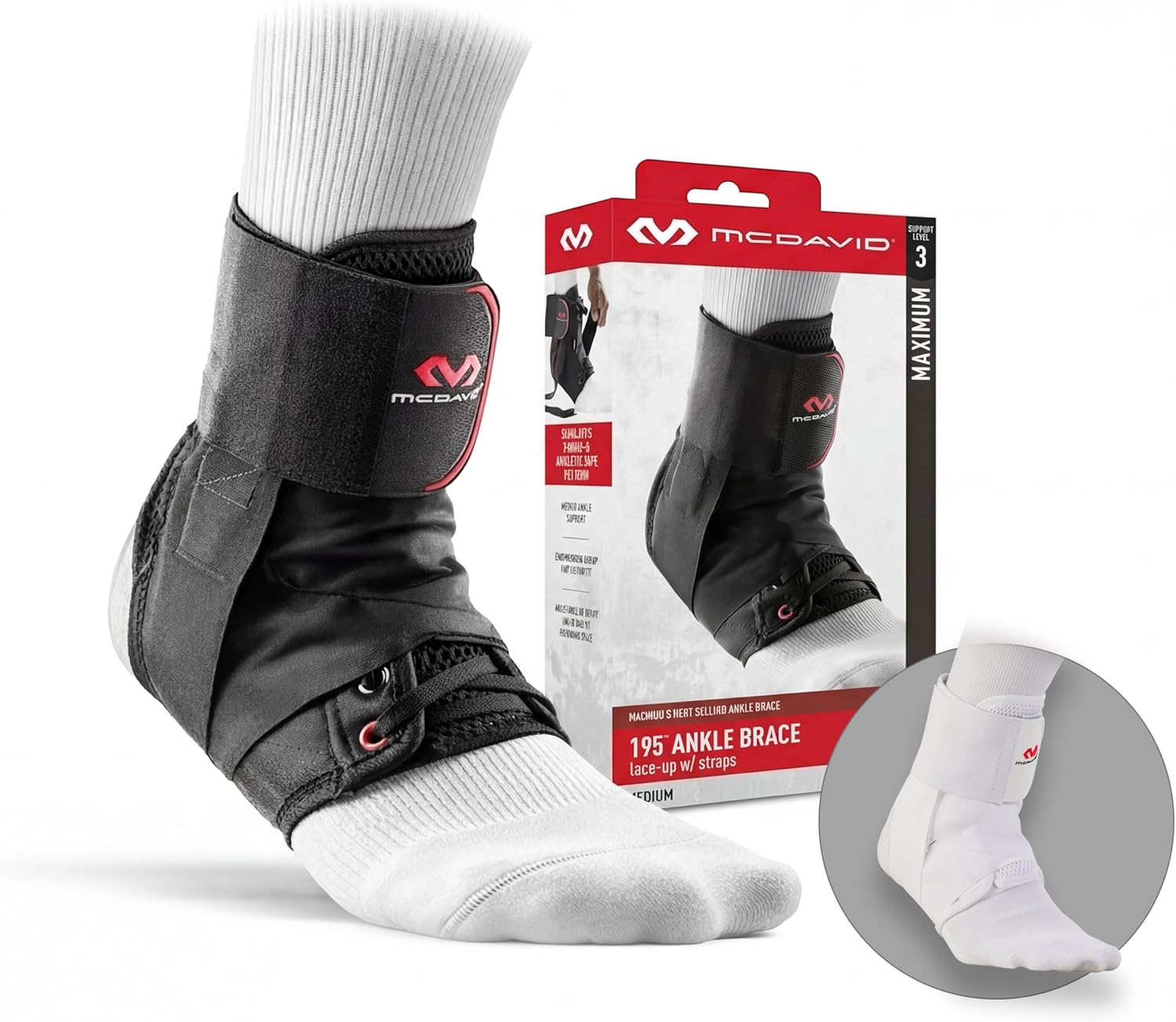
The McDavid 195 is the brace for players who roll their ankle over and over again. The lace-up design is reinforced with bilateral metal stays — thin metal inserts on both sides that physically resist lateral ankle movement. It’s more restrictive than the ASO, but that restriction is the point. If your ankle gives way during lateral lunges despite rehab, this is the next step before a rigid splint. We found the lockdown excellent but noticed it limits dorsiflexion slightly — you may feel it during deep lunges. For players with genuine chronic instability, the trade-off is worth it. For mild instability, the ASO gives better comfort-to-support ratio.
- Bilateral metal stays prevent lateral rolling
- Stronger support than standard lace-ups
- Good for chronic, recurrent sprains
- Durable construction — lasts well with regular use
- More restrictive than the ASO
- Can limit dorsiflexion in deep lunges
- Metal stays may cause pressure points if poorly fitted
- Overkill for mild instability
Zamst A2-DX
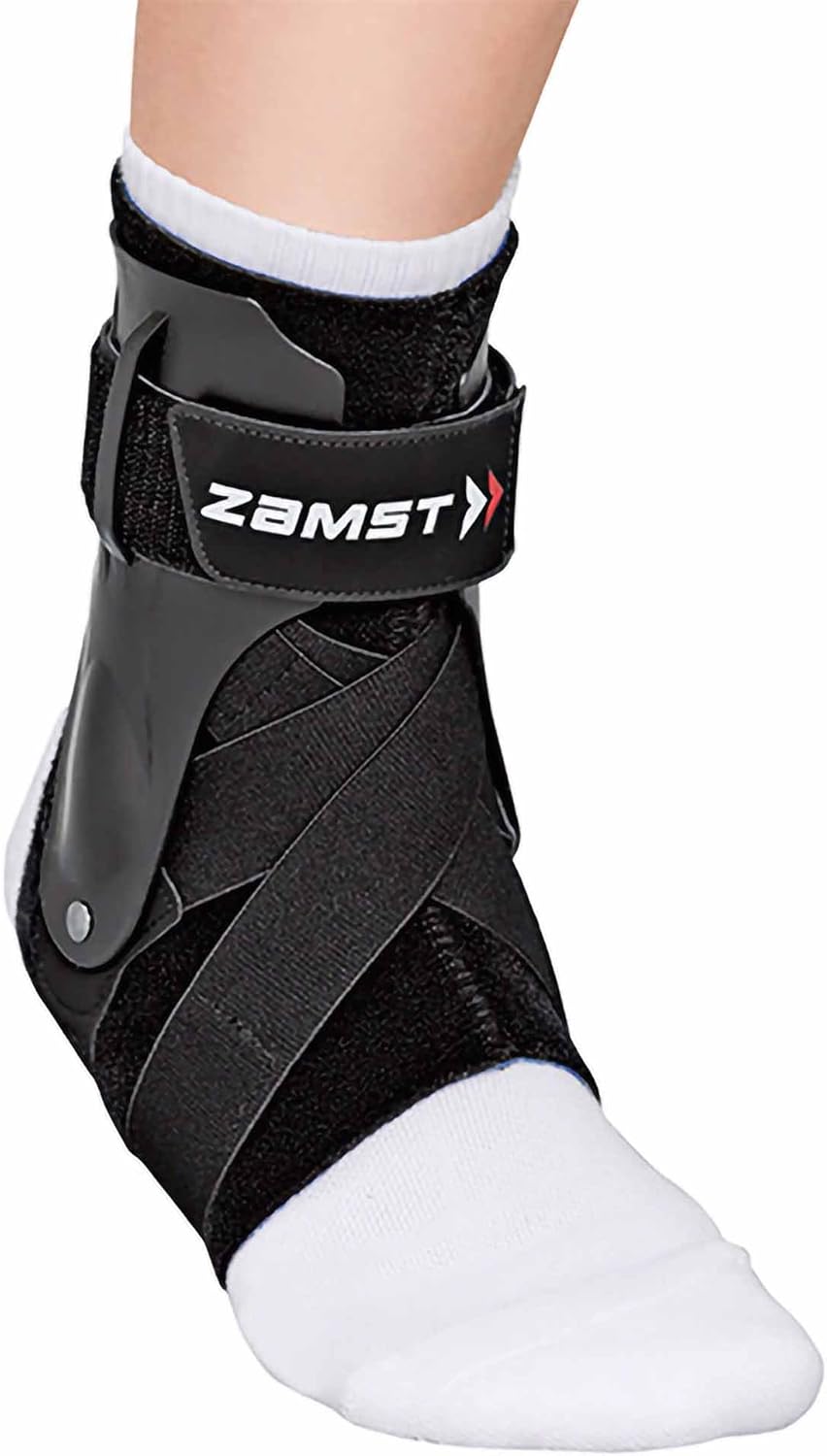
The Zamst A2-DX is the brace used in professional court sports for serious ankle instability. The dual-support system combines an internal stabiliser with external strapping, providing the most comprehensive anti-roll protection of any non-rigid brace we compared. It’s what you choose when you’ve tried lace-ups and they’re not enough. The build quality is excellent, and the support level is a genuine step above the ASO and McDavid. The trade-off is price and bulk. This is a premium product at a premium cost. It’s also thicker than standard lace-ups, so shoe compatibility matters — test it with your padel shoes before playing competitively.
- Maximum lateral anti-roll for a non-rigid brace
- Used in professional court sports
- Dual-support system — internal + external
- Excellent build quality and durability
- Step above standard lace-ups for serious instability
- Premium price point
- Thicker profile than standard lace-ups
- May need wider shoes or half size up
- Can reduce agility in fast direction changes
- Overkill for mild or moderate instability
Sleeve Stars Ankle Brace

The Sleeve Stars sits in the gap between a pure compression sleeve and a proper brace. The adjustable strap adds mild mechanical support on top of the compression, giving you more than a sleeve alone without the bulk of a lace-up. We found it useful as a confidence builder during return to play — the proprioceptive feedback helps you “feel” your ankle position, which matters when trust is low. Good for players with mild instability or those weaning off a stronger brace. Honest note: if you have true lateral instability — your ankle actually gives way during play — this is not enough. Step up to the ASO or McDavid.
- Good bridge between sleeve and brace
- Adjustable strap adds mild support
- Proprioceptive feedback builds confidence
- Fits in any padel shoe
- Affordable
- Not enough for true lateral instability
- Strap can loosen during intense play
- Less durable than lace-up options
- Won’t prevent a roll under high force
POWERLIX Ankle Bandage

The POWERLIX is the most affordable option on this list — and the most limited. It’s a pure compression sleeve. No straps. No stays. No mechanical anti-roll protection. What it does offer: mild warmth, improved blood flow, and proprioceptive awareness. That can be enough for players with very mild discomfort or those who want long-session comfort without any bulky support. We use this category of sleeve for general warmth during cold-weather sessions, not for injury management. If you’re buying this to prevent ankle rolling, you’re buying the wrong product. It does not prevent inversion. For actual instability, start with the ASO at minimum.
- Most affordable option
- Comfortable for long sessions
- Provides mild warmth and compression
- Fits in any shoe without adjustment
- Good for proprioceptive awareness
- Does NOT prevent ankle rolling
- No mechanical support whatsoever
- Not suitable for any instability level
- Thin material can wear quickly
- Easy to overestimate its protection
Bauerfeind Ankle Support

Bauerfeind makes beautiful medical-grade products, and this ankle support is no exception. The anatomical knit design, the quality of materials, the comfort — it’s all a level above standard compression sleeves. It provides excellent compression, warmth, and proprioceptive feedback. Where it falls short for padel players: it’s not an anti-roll solution. There are no stays, no rigid elements, no figure-8 strapping. If your ankle rolls under load, this will not stop it. It’s best used alongside a proper brace — wear the Bauerfeind for comfort and recovery, and switch to an ASO or McDavid for actual play. Or use it when you’ve completed rehab and no longer need mechanical support but want the confidence boost.
- Premium build quality and materials
- Excellent anatomical fit
- Superior compression and proprioception
- Great for recovery and comfort
- Medical-grade design
- Not an anti-roll solution
- No mechanical support against inversion
- Premium price for a compression product
- Best used alongside a proper brace, not instead of one
- Can give false confidence to players who need more support
ICEHOF Cooling Pads

The ICEHOF is not an ankle brace. It is a cold therapy tool with gel pads designed to reduce swelling after a sprain or after intense play. We’re including it because it’s the most common recovery question we get: “What should I use after I roll my ankle?” The answer is ice, compression, and elevation — and this product handles the first two. Use it in the first 48–72 hours after an acute sprain, or after any session where your ankle feels hot and swollen. Then move to rehab. Do NOT wear this on court. Do NOT treat this as a substitute for a proper ankle brace. It is a recovery tool, and a good one — but its job ends when you stand up to play.
- Effective cold therapy for post-sprain swelling
- Gel pads provide consistent cooling
- Combines ice and compression
- Useful for post-match ankle recovery
- Reusable and durable
- NOT a playing brace — cannot be worn on court
- Does not provide mechanical support
- Requires freezer time between uses
- Only addresses swelling, not stability
- Often bought by mistake as a playing brace
More support = more stability, but can reduce agility. The 2026 research confirms this tradeoff. Semi-rigid braces limit range of motion by design — that’s what makes them protective, but it also means slower direction changes and reduced proprioceptive input. Choose based on your recovery phase, not maximum lockdown. As you rebuild strength, step down from rigid to lace-up to compression to nothing.
An Ankle Brace Will Not Fix Your Ankle
The honest truth most gear guides won’t tell you
What a Brace Can and Cannot Do
What it does
Reduces the risk of re-injury by mechanically limiting dangerous ranges of motion. Improves confidence on court — which matters more than people think. Provides proprioceptive feedback that helps your brain track ankle position. Enables earlier return to play than going without any support.
What it does NOT do
It does not rebuild ligament strength. It does not improve balance. It does not replace physiotherapy or progressive loading. It does not make a weak ankle strong. If you wear a brace forever without rehab, your ankle stays weak — it just doesn’t roll as often.
The goal is to use a brace as a bridge: protect while you rebuild, then wean off as strength returns. See our padel recovery guide and injury prevention system for the full rehab picture.
Ankle Brace FAQs
The questions padel players ask most
Do ankle braces prevent padel ankle sprains?
Ankle braces help reduce the risk of recurrence, especially for players with a history of sprains. They do not guarantee prevention. Research shows lace-up and semi-rigid braces significantly reduce re-sprain rates, but no brace eliminates the risk entirely. Rehab and strength work remain essential.
Lace-up vs semi-rigid — which is better?
Lace-up braces (like the ASO) are the most versatile — good support, fit in most shoes, comfortable for regular play. Semi-rigid splints (like the Aircast) offer maximum protection but are bulkier and less comfortable for extended use. Use semi-rigid for the acute phase, then step down to lace-up for ongoing play.
Can I play padel with an ankle brace?
Yes. Most lace-up and compression braces are designed to be worn during sport. Choose the right type for your recovery phase: semi-rigid for early return, lace-up for ongoing instability, compression for mild support. Semi-rigid braces may reduce agility — that’s a deliberate trade-off for protection.
Will an ankle brace slow me down?
It’s possible, especially with semi-rigid braces. Research supports that rigid and semi-rigid braces can reduce range of motion and affect complex movement patterns. Lace-up braces have less impact on agility. The trade-off is worth it during recovery — being on court slower is better than not being on court at all.
How long should I wear an ankle brace for padel?
Until your ankle strength is rebuilt through progressive rehab. Most physiotherapists recommend bracing during sport for 3–6 months after a significant sprain, then weaning off progressively. Don’t stop suddenly — step down from rigid to lace-up to compression to nothing over time.
Do I still need physio if I wear an ankle brace?
YES. A brace is an adjunct to rehabilitation, not a replacement. It protects while you rebuild, but it does not rebuild for you. Without rehab — balance training, progressive loading, proprioception work — your ankle stays weak underneath the brace. See our recovery guide for more.
Will an ankle brace fit in my padel shoes?
Most lace-up braces fit in standard padel shoes without sizing up. Semi-rigid splints may require a half size up or a wider shoe. Compression sleeves fit in any shoe. ASICS models run narrow — test with your brace before playing. NOX and wider-last shoes are generally more brace-friendly. See our padel shoe guide for fit details.
Can I wear an ankle brace in padel shoes without it feeling too tight?
Lace-up braces (like the ASO and McDavid 195) are thin enough to fit inside standard padel shoes without reducing shoe fit significantly. Semi-rigid braces (like the Aircast) add more bulk and may require going half a size up in your shoe. Compression sleeves fit under virtually any shoe. If you are unsure, try the brace on with your intended padel shoe before buying. Most lace-up braces from reputable brands are designed specifically for use inside athletic footwear.
How long should I wear an ankle brace after a sprain?
For a grade 1 sprain (mild — no instability), typically 1-3 weeks of support during play, with gradual weaning as strength returns. For grade 2 (partial ligament tear — some instability), typically 4-8 weeks with a structured rehab programme. For grade 3 (complete tear), you need physiotherapy guidance before making brace decisions. See our padel ankle pain guide for the full return-to-play protocol. Never use a brace as a substitute for rehabilitation — the goal is to restore the strength and proprioception that prevent re-injury.
Should I use an ankle brace for prevention or only after injury?
Both, but with different products. For acute injury support after a sprain, use a lace-up or semi-rigid brace that provides structural support. For prevention in players with no injury history, a light compression sleeve worn during play improves proprioception (the ankle’s ability to sense position) without restricting movement. Players with a history of ankle sprains benefit most from regular prophylactic bracing during high-intensity matches.
Protect Your Ankle. Rebuild Your Confidence. Return to Court Safely.
The right ankle brace buys you time to rebuild. Choose based on your recovery phase, pair it with rehab, and get back to playing the sport you love — without fear.
See Our Full Ankle Pain Guide →
