
The Real Fix for Heel, Calf & Foot Pain in Padel.
If you play padel more than twice a week and you’re dealing with heel pain, calf tightness, or feet that ache the morning after — your shoes are probably not the problem. Your insoles are.
We use insoles ourselves — for calf and heel-area issues that shoes alone couldn’t fix. This guide comes from that experience, not from product descriptions.
You know the feeling — you want gear that makes a real difference on court, not just marketing hype. Most players don’t realise how much the right support changes not just comfort but long-term injury prevention. We’ve been through it — testing what works and what doesn’t — and this guide reflects that real-court experience.
In short: this guide covers the best options for Best Insoles for Padel (2026): Real Fix for Heel, Calf Foot Pain, who each product suits, and what to look for. All prices are in EUR from amazon.de.
Playing 4–5 times a week, the calf tightness and heel pain kept coming back. New shoes helped a little. Stretching helped a little. But it wasn’t until we added proper insoles that the pattern actually broke. That’s not a sales pitch — it’s what happened.
Insoles are not optional if you play a lot. They are the difference between constant pain and long-term performance.
Our Top Picks at a Glance
Five insoles, five different jobs — not all insoles are the same
| Insole | Type | Price | |
|---|---|---|---|
| Superfeet High Arch Support Orthotic Insoles Best for Arch Support | Orthotic Support | €€€ | Check availability → |
| Currex RunPro Best for Active Players | Sport Hybrid | €€€ | Check availability → |
| Scholl GelActiv Sport Best Budget Option | Gel Cushioning | € | Check availability → |
| Sidas 3Feet Activ Best Anatomical Fit | Anatomical Support | €€ | Check availability → |
| PCSsole Orthopaedic Insoles Gen 2 Best Orthopaedic Support | Orthopaedic Support | €€ | Check availability → |
How to Choose the Right Insole
Cushioning, support, and arch type are not the same thing
Cushioning vs Support — They Solve Different Problems
Cushioning insoles (soft)
These absorb impact. They feel comfortable immediately. Good for heel pain, bruised soles, and players who want their shoes to feel softer. But they don’t correct alignment or control how your foot moves. If your problem is pronation or flat feet, cushioning alone won’t fix it.
Support insoles (firm)
These control movement. They hold your arch, reduce pronation, and distribute pressure across the foot instead of concentrating it on the heel. They feel less soft at first — but over 2–3 weeks they reduce pain far more effectively than cushioning alone for structural foot issues.
The honest answer
Most padel players with recurring pain need support first, cushioning second. If your pain is purely impact-related (heel bruising after long matches), gel cushioning works. If your pain is structural (flat feet, overpronation, calf tightness that starts from the ground up), you need orthotic support.
Flat Feet / Low Arch
Need firm orthotic support. Superfeet or PCSsole. Control pronation before adding cushioning.
Neutral Arch
Most insoles work. Choose by primary need — sport performance (Currex) or comfort (Scholl).
High Arch
Need cushioning under the arch and heel. Sidas 3Feet (high version) or Currex with arch profile.
1–2x / Week
Any quality sport insole improves comfort. Scholl GelActiv is a solid starting point.
3x / Week
Support insoles recommended. Cumulative stress builds — your feet need more than cushioning.
4–5x / Week
Orthotic or sport-specific insole mandatory. Replace every 6–9 months. This is where insoles pay for themselves.
Shoe + Insole Compatibility
ASICS (narrow last)
ASICS padel shoes run slightly narrow. Thicker orthotic insoles may feel too tight. Use thinner-profile support insoles (Currex or Sidas) or go half a size up in the shoe. See our padel shoe guide for details.
NOX / wider shoes
NOX and some Babolat models have wider lasts that accommodate thicker insoles more easily. If you need a full orthotic (Superfeet, PCSsole), pair it with a wider shoe.
Always remove the stock insole
Every aftermarket insole replaces the stock insole — don’t stack them. Remove the original, insert the new one. If the fit feels off, the insole may be too thick for your shoe model.
The 5 Insoles We Recommend
Each solves a different problem — choose by your situation, not by price
Superfeet High Arch Support Orthotic Insoles

The Superfeet High Arch is not a comfort insole. It’s a structural correction tool. The deep heel cup stabilizes your foot. The firm arch support reduces overpronation. If you have genuinely flat feet or low arches, this is the insole that changes how your foot interacts with the court. It feels firm at first — give it 1–2 weeks to break in. After that, most players notice significantly less heel and calf pain. This is the kind of insole a podiatrist would recommend as a starting point before custom orthotics.
- Strongest arch support in this lineup
- Deep heel cup for stability
- Durable — lasts 6–12 months at high volume
- Recommended by podiatrists as an OTC starting point
- Firm — not comfortable on day one
- Can feel tight in narrow shoes (ASICS)
- Not ideal if you just want softness
Currex RunPro

The Currex RunPro is designed for athletes who move. Dynamic arch support adapts as your foot loads and unloads during lateral movement — exactly what happens in padel. It’s lighter and more flexible than traditional orthotics, which means it doesn’t fight your movement. Used by professional athletes across tennis, running, and racket sports. If you’re injury-free but want to prevent problems and improve how your foot works inside your shoe, this is the performance pick.
- Dynamic support that adapts to movement
- Lighter than rigid orthotics
- Designed for lateral sport movement
- Available in different arch profiles
- Premium price
- Less corrective power than rigid orthotics
- Requires choosing the right profile (measure first)
Scholl GelActiv Sport
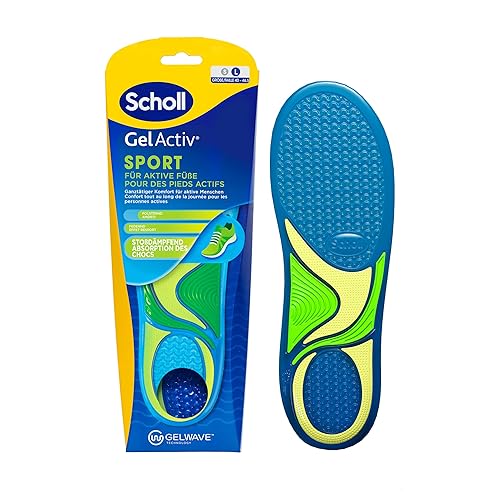
The Scholl GelActiv Sport is the entry point. Soft gel cushioning under the heel and forefoot. Immediately more comfortable than stock insoles. Available in most pharmacies and supermarkets across Europe. If your primary issue is sore heels after long matches and you’re not dealing with structural foot problems, this does the job at a fraction of the price of specialist insoles. It won’t correct pronation or support a collapsed arch — but for pure impact absorption, it’s effective and affordable.
- Most affordable option
- Immediately comfortable — no break-in needed
- Available everywhere in Europe
- Good heel and forefoot cushioning
- No arch support or structural correction
- Gel compresses faster than foam — shorter lifespan
- Not enough for flat feet or serious biomechanical issues
Sidas 3Feet Activ

What makes Sidas different is the fit system. The 3Feet Activ comes in three arch profiles — low, mid, and high — so you’re not forcing your foot into a one-size design. You measure your arch (Sidas has a simple guide) and choose the version that matches. This means the support is more precisely matched to your anatomy than a universal insole. The construction balances support and cushioning — firmer than Scholl, softer than Superfeet. A good middle ground for players who know their arch type.
- Three arch profiles for personalized fit
- Good balance of support and cushioning
- Well-made construction
- Works in most shoe widths
- Requires knowing your arch type (measure first)
- Not as firm as dedicated orthotics
- Mid-range durability — 6–9 months
PCSsole Orthopaedic Insoles Gen 2

The PCSsole Gen 2 is built for players who need serious structural support. Deep heel cup. Firm arch plate. Designed to redistribute pressure away from the heel and metatarsal heads. If you’ve been told you need orthotics but aren’t ready for custom-made ones, this is a strong over-the-counter alternative. It’s firmer than most sport insoles — closer to what a physiotherapist would prescribe. The trade-off is comfort: it takes longer to adapt to, and it’s not designed to feel soft. It’s designed to fix how your foot works.
- Strong orthopaedic-grade support
- Deep heel cup for stability
- Pressure redistribution design
- Good value for the support level
- Firm — longer adaptation period
- Not sport-specific (functional, not dynamic)
- May feel bulky in narrow shoes
What Actually Helped My Calf and Heel Pain
The honest timeline from constant pain to playing pain-free
From 5x/Week Pain to Playing Pain-Free
The problem
Playing 4–5 times a week, the pattern was always the same. Match feels fine. Next morning: tight calves, sore heels, stiffness in the Achilles. Stretching helped temporarily. New shoes helped a little. But within a week the pain was back. Every time.
What failed
Tiger Balm before matches. Static stretching after. Ice on the heels. Softer shoes. None of it broke the cycle. The problem wasn’t the symptoms — it was how my feet were loading on every step, and nothing I was doing addressed that.
What worked
Adding proper support insoles to stable padel shoes. Not gel pads. Not random pharmacy insoles. Actual arch support that changed how my foot distributed pressure. Within two weeks, the morning-after tightness dropped noticeably. Within a month, I could play five times a week without the calf and heel cycle coming back.
That’s not everyone’s experience — foot problems are individual. But for overuse pain driven by flat feet, pronation, or alignment issues, insoles were the single most effective change.
Common Insole Mistakes
Avoid these before spending money
1. Choosing only by softness. Soft insoles feel good in the store but don’t fix structural problems. Support often matters more than cushioning.
2. Wrong arch type. A high-arch insole in a flat foot — or vice versa — makes things worse, not better. Know your arch first.
3. Not replacing them. Insoles lose their support after 6–12 months of regular play. If yours are flat and compressed, they’re doing nothing.
4. Stacking with bad shoes. The best insole can’t fix a shoe with a dead midsole or wrong lateral support. Fix the shoe first, then add insoles.
5. Using running insoles for padel. Running is linear. Padel is lateral. Running insoles are designed for forward motion and may not support the lateral movements padel demands.
Insole FAQs
The questions we get asked most
Do insoles actually help with padel injuries?
Yes — if you choose the right type. Orthotic insoles reduce overpronation and redistribute pressure, which directly helps with heel pain, plantar fasciitis, calf tightness, and some knee issues. Cushioning insoles help with impact soreness. Neither replaces proper warm-up or strength training.
Are custom orthotics necessary?
Not always. Quality over-the-counter insoles like the Superfeet or PCSsole provide significant correction. Custom orthotics make sense if OTC options don’t resolve your pain after 4–6 weeks, or if a podiatrist identifies a specific biomechanical issue that needs a custom solution.
Can I use running insoles for padel?
Running insoles are designed for forward linear movement. Padel involves constant lateral movement, direction changes, and explosive starts. A sport-specific insole (like the Currex) or a general orthotic is better suited. Running insoles may not support the lateral forces padel generates.
How long do padel insoles last?
At 3x/week play: 6–12 months for foam/EVA insoles, 4–8 months for gel. When they feel flat and compressed, they’re done. Rigid orthotics last longest. Replace before they lose their support — don’t wait until pain returns.
Do professional padel players use insoles?
Many do. At the professional level, custom orthotics fitted by sports podiatrists are common. At the amateur level, quality OTC insoles provide a significant improvement over stock shoe insoles for most players.
Which insoles are best for calf pain?
Calf pain that starts from the feet is usually caused by overpronation or poor foot alignment forcing the calf to compensate. Orthotic support insoles (Superfeet, PCSsole) that control pronation tend to help more than cushioning insoles for this pattern.
Should I replace the stock insole in my padel shoes?
Yes. Always remove the stock insole before inserting an aftermarket one. Don’t stack them — it changes the fit and can cause more problems. Most padel shoes have removable stock insoles by design.
How long do padel insoles last before they need replacing?
Sport insoles generally last 6-12 months at 3x/week play intensity. Gel insoles (like the Scholl) compress faster and may need replacing every 4-6 months. Orthopaedic insoles (Superfeet, PCSsole) are denser and typically last 8-12 months. A simple test: press your thumb into the heel area. If it compresses immediately with no spring-back, the cushioning is gone. Another sign: you start feeling heel or calf discomfort again that was previously resolved by the insoles.
Can I use padel insoles in any padel shoe?
In most cases, yes. Most padel shoes come with a removable stock insole — remove it before inserting the aftermarket insole, otherwise you add too much volume and the shoe will be too tight. If the stock insole is glued in, check whether the shoe manufacturer intended insole customization. Most ASICS and NOX models have removable insoles. If in doubt, try with the shoe laced up and verify your toes have at least a thumb’s width of space at the front.
What is the difference between an insole and an orthotic?
An insole is a general term for any insert placed inside a shoe. An orthotic is a specific type of insole designed to correct foot mechanics or biomechanical problems. Off-the-shelf orthotics (like Superfeet) are made for broad foot-type categories. Custom orthotics are made from a plaster cast or 3D scan of your specific foot by a podiatrist. For most padel players with mild to moderate issues, a quality off-the-shelf sport insole is sufficient. If you have been dealing with the same recurring foot, knee, or calf problem for more than 3 months despite insoles, a podiatry referral for custom orthotics is worth considering.
Fix the Foundation. Everything Else Gets Easier.
Your feet are where every movement starts. The right insoles protect your heels, support your arches, and reduce the chain reaction that causes calf, knee, and back pain. Start with the insole that matches your foot type — not the most expensive option.
See the Full Padel Shoe Guide →
