
Best Padel Recovery Massage Tools: What Is Actually Worth Your Money.
Padel creates repeated load on calves, quads, feet, forearms, and shoulders. Every match is hundreds of lateral movements, split steps, and overhead swings. That load accumulates. Recovery tools can help manage it, but not all tools offer equal value. Some are genuinely useful. Some are premium luxuries. And some are only relevant in very specific cases. This guide explains what is truly worth buying, what is an upgrade for serious players, and what is only useful if you have a particular need. No hype. No miracle claims. Just honest recommendations based on what we actually use and what the evidence supports. For the complete recovery system beyond tools, see our padel recovery guide.
We have spent real money on recovery tools — from a simple foam roller to premium compression systems. Some of them changed our recovery routine. Some of them sit in a cupboard. This guide tells you which is which, honestly.
The best recovery tool is the one you will actually use consistently. A foam roller used every day beats compression boots used once a month.
Why This Page Is Different
These are not cheap purchases — you deserve more than a top-5 list
Why We Go Deeper on Recovery Tools
The price range demands honesty
These products range from under 30 euros to over 800 euros. At that price level, you need more than a quick comparison table and a “buy now” button. You need to understand what each tool actually does, who it is for, and whether the investment makes sense for your specific situation.
The right choice depends on you
How often you play. Where you feel fatigue most. Whether you travel for tournaments. Your budget. A foam roller is perfect for one player. Compression boots are justified for another. A foot massager is essential for a third. There is no universal best answer.
We categorize every product clearly
Every tool on this page falls into one of three categories: essential first buy, premium upgrade, or niche tool. We tell you which is which so you can make the right decision for where you are right now.
What Actually Helps vs What Just Feels Good
Understanding the evidence behind recovery tools
Sorting Effective From Comfortable
Foam rollers and massage guns: the best first buys
Active tools that you control. You target specific areas, adjust pressure, and work on exactly what needs attention. The evidence base for foam rolling and percussive therapy is solid — reduced delayed onset muscle soreness, improved range of motion, and faster perceived recovery. These are the tools with the strongest combination of evidence, affordability, and practical use.
Compression systems: feel excellent, evidence is mixed
Pneumatic compression boots and leg massagers feel incredible. Passive recovery where you sit and let the system do the work. The evidence for perceived recovery improvement is strong — players consistently report feeling better and less sore after use. But the evidence for actual performance improvement from compression alone is more debatable. Compression is a luxury that enhances recovery comfort. It is not a necessity that transforms your game.
Convenience is underrated
A tool that gets used five times per week beats a better tool that stays in the cupboard. Portability and simplicity matter more than specifications on paper. A compact massage gun you throw in your padel bag will do more for you than a premium system you only use on weekends.
Recovery tools support the system — they do not replace it
No recovery tool replaces sleep, strength work, nutrition, or load management. A massage gun after a match helps. Eight hours of sleep helps more. Progressive strength training helps most of all. Tools are the supplement, not the foundation. See our injury prevention guide for the complete system.
The 3 Use Cases in Padel
Match your recovery tools to how you actually play
After Match Reset
Heavy calves, tired legs, local muscle tightness. This is where foam rollers and massage guns shine. Target the areas that took the most load — calves, quads, IT band — and work through the tightness while it is fresh.
Travel / Tournament
Portability and consistency matter most. You need tools that fit in your bag and work in a hotel room. A compact massage gun like the Hypervolt Go 2 is the clear winner here. Even five minutes of targeted work between matches helps more than nothing.
Premium At-Home Recovery
Passive systems for frequent players who want hands-free recovery at home. Compression boots while watching TV. A foot massager after heavy sessions. These are upgrades for players who already have the basics covered and play four or more times per week.
Our Top Picks at a Glance
Five recovery tools compared — the Revitive Medic is reviewed separately as a niche medical device
| Tool | Type | Price | |
|---|---|---|---|
| Hypervolt Go 2 Best Overall / Best Travel | Massage Gun | €€€ | Check availability → |
| TriggerPoint Grid Fascia Roller Best Value / Best First Buy | Foam Roller | €€ | Check availability → |
| Hyperice Normatec 3 Best Premium Compression | Compression Boots | €€€€€ | Check availability → |
| FIT KING Wireless Leg Massager Best Budget Compression | Leg Compression | €€ | Check availability → |
| Miko Shiatsu Foot Massager Best for Tired Feet | Foot Massager | €€€ | Check availability → |
We also review the Revitive Medic below as a niche medical-positioned device — it is NOT a standard recovery tool.
The 6 Recovery Tools We Recommend
Honest, detailed reviews — who should buy, who should skip, and why
Hypervolt Go 2
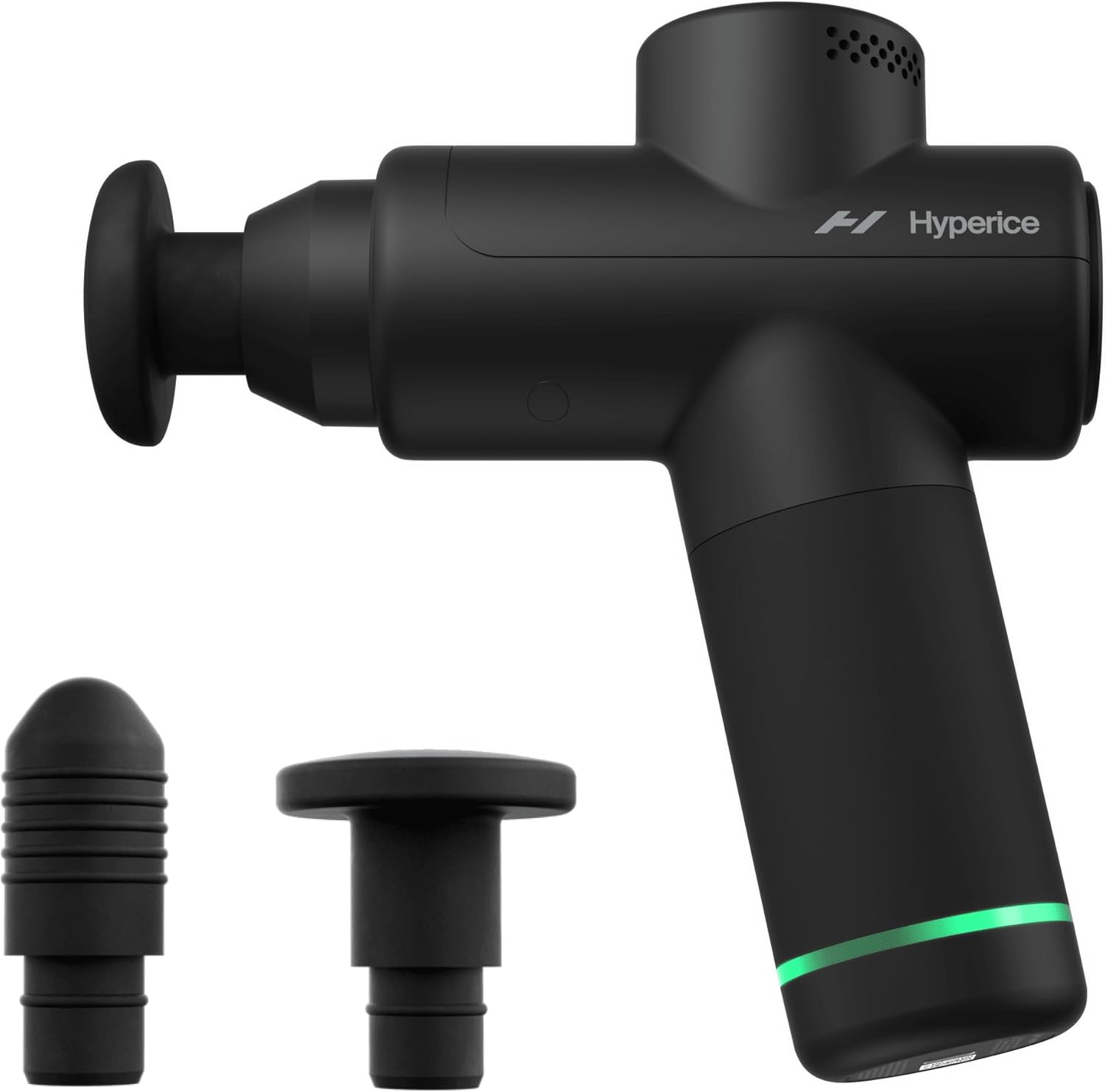
The best overall recovery tool for most padel players. The Hypervolt Go 2 is the travel-sized version of Hyperice’s flagship massage gun — compact enough to fit in your padel bag, powerful enough to handle serious muscle work. Three speed settings cover everything from light pre-match activation to deep tissue work on stubborn calf knots. The percussion therapy targets specific areas with precision that a foam roller cannot match. Use it on calves before and after matches, on forearms if your grip feels tight, on quads after heavy sessions, and on shoulders after overhead-intensive play. The battery lasts multiple sessions on a single charge. Build quality is premium — it feels like a proper tool, not a toy. The noise level is impressively low, which matters if you are using it at a club or in a hotel room. This is the recovery tool we reach for most often, and the one we recommend most frequently to players who want a single versatile option.
- Compact enough to fit in a padel bag
- Three speed settings for different needs
- Quiet operation — usable in shared spaces
- Premium build quality and long battery life
- Targets specific muscle areas with precision
- Effective for both pre-match activation and post-match recovery
- Not cheap — premium price for a massage gun
- Smaller head than full-size models (trade-off for portability)
- Requires you to do the work — not passive recovery
- No-name alternatives exist at half the price (but with worse build quality and battery)
Any padel player who wants one recovery tool that does everything. Players who travel for tournaments. Players who want targeted muscle work they can control.
Post-match calf and quad release. Pre-match muscle activation. Forearm work for grip tightness. Between matches at tournaments.
Players on a tight budget — the foam roller delivers similar benefits for a fraction of the price. Players who want passive, hands-free recovery — this requires active use.
TriggerPoint Grid Fascia Roller

The best first buy, period. No batteries, no charging, no complexity. Just lie on it and roll. The TriggerPoint Grid is the foam roller that physiotherapists recommend most frequently, and for good reason. The textured surface features three distinct zones that mimic a therapist’s fingers — flat for broad strokes, tubular for trigger point work, and finger-like for deep tissue. It works on calves, quads, IT band, upper back, thoracic spine, hamstrings, and glutes. Every single muscle group that padel loads can be addressed with this one tool. It lasts for years. The construction holds its shape under repeated heavy use, unlike cheap foam rollers that compress and flatten within months. It costs a fraction of any electronic tool on this page. If you only buy one recovery product for your entire padel career, this is it. The evidence base for foam rolling is strong — reduced delayed onset muscle soreness, improved range of motion, and better perceived recovery. And you do not need to charge it, maintain it, or worry about it breaking.
- No batteries, no charging, no maintenance
- Textured surface mimics therapist techniques
- Works on every major muscle group
- Extremely durable — lasts for years
- Affordable — a fraction of electronic tools
- Strong evidence base for foam rolling benefits
- Universal — every padel player benefits from this
- Requires effort — you have to roll yourself
- Can be uncomfortable on tight spots (that is the point)
- Not portable enough for carry-on travel
- Cannot target small, specific areas as precisely as a massage gun
Everyone. Literally every padel player benefits from a foam roller. This is universal. Beginners and professionals alike.
Daily calves and quads after matches. IT band and thoracic spine maintenance. Pre-match muscle preparation. General myofascial release.
Nobody. There is no padel player who would not benefit from owning a quality foam roller. If you play padel and you do not own a foam roller, start here.
Hyperice Normatec 3

The most expensive item on this page by far — and the one that requires the most honest discussion. The Hyperice Normatec 3 is a dynamic air compression system that sequentially pulses from feet to hips. You strap in, sit down, and the system does the work. Used by professional athletes across every sport. The sensation is genuinely impressive — methodical, sequential compression that moves blood and fluid from the extremities back toward the core. After a heavy padel session with tired, heavy legs, putting on the Normatec feels like someone draining the fatigue out of your calves. The evidence: perceived recovery improvement is strong and consistent. Players who use compression boots report feeling significantly better and less sore. Actual measurable performance improvement from compression alone is more debatable in the research literature. Some studies show modest benefits. Others show no significant performance advantage over passive rest. What is not debatable is the subjective experience — your legs feel better. Whether that translates to measurably faster sprints the next day is less clear. This is a premium luxury that serious, frequent players swear by. It is not a necessity.
- Sequential dynamic compression from feet to hips
- Passive recovery — no effort required
- Used by professional athletes globally
- Strong perceived recovery and comfort benefits
- Customizable pressure levels and zones
- Premium build quality and app connectivity
- Very expensive — the highest price on this page by a large margin
- Bulky — not portable for travel
- Evidence for actual performance improvement is mixed
- Only useful if used regularly — occasional use does not justify the cost
- The foam roller + massage gun combination covers 90% of recovery needs at 10% of the cost
Players who play 4-5 times per week, have the budget, and want passive recovery they can do while watching television or reading. Players who have already invested in the basics and want to add another layer.
Evening recovery after heavy playing days. Rest days when legs feel heavy. Tournament weekends with multiple matches.
Anyone who plays 1-2 times per week — this is overkill for casual play. Anyone on a budget — the foam roller and massage gun combination covers 90% of recovery needs at 10% of the cost. Anyone who will not use it regularly — occasional use does not justify this investment.
FIT KING Wireless Leg Massager

The budget alternative to the Normatec for players who want leg compression without the premium price tag. The FIT KING Wireless Leg Massager uses air compression to squeeze and release around the calves and thighs. It is wireless, portable, and simple to operate. It does not have the sequential pulsing sophistication of the Normatec — the compression pattern is more basic, cycling through inflate and deflate rather than the graduated wave pattern. But for players who want the core benefit of compression recovery — reduced leg heaviness and improved perceived recovery — without spending over 800 euros, this delivers. The wireless design means you can use it anywhere. The controls are straightforward. It does what it needs to do without the premium engineering and the premium price.
- Fraction of the Normatec price for the core compression benefit
- Wireless and portable
- Simple, straightforward controls
- Effective at reducing perceived leg heaviness
- Good entry point for compression recovery
- Less sophisticated compression pattern than Normatec
- Build quality is adequate, not premium
- No sequential graduated pulsing
- Less customizable than premium systems
- Not a substitute for active recovery tools
Players who want compression recovery without the Normatec price. Frequent players who want passive leg recovery on a budget. Players curious about compression who want to try it before investing in premium.
Post-match leg recovery for frequent players. Evening use after heavy playing days. Rest days when calves and quads feel heavy.
Players who already own the Normatec — this is redundant. Players who prefer active recovery — a foam roller and movement will serve you better. Players who only play once a week — the basics are enough.
Miko Shiatsu Foot Massager

This is a niche comfort tool, not an essential. If your feet hurt after padel — soles aching, plantar tension, heel soreness — this addresses it directly. The Miko Shiatsu Foot Massager uses deep-kneading shiatsu nodes that work the arch, heel, and ball of the foot. It replicates the sensation of a focused foot massage without the therapist. For players who deal with foot-specific fatigue after matches, especially those with plantar fasciitis tendencies or chronic sole soreness, this provides targeted relief that a general foam roller cannot match. The heating function adds warmth that helps relax tight foot muscles. However, this is not a tool every padel player needs. If your feet feel fine after matches, you do not need this. A foam roller under the feet works for general maintenance. The Miko is for players where foot recovery is a specific, recurring problem that general tools do not adequately address.
- Targets foot-specific recovery precisely
- Deep-kneading shiatsu nodes work arch, heel, and ball
- Heating function for additional muscle relaxation
- Passive — sit and let it work
- Good for plantar fasciitis tendencies and chronic foot soreness
- Niche — not every player needs foot-specific recovery
- Not portable — home use only
- A foam roller under the feet covers basic foot maintenance
- Mid-range price for a very specific use case
- Does not address the root causes of foot pain
Players with foot-specific fatigue, plantar fasciitis tendencies, or chronic sole soreness. Players who simply want evening foot comfort after heavy playing days.
Evening wind-down after heavy playing days. Targeted foot recovery when the soles ache. Comfort tool for players on their feet all day beyond padel.
Players whose feet are fine after matches — not everyone needs foot-specific recovery. Players on a budget — a foam roller or lacrosse ball under the feet works for basic foot maintenance. Players looking for a general recovery tool — this is too specific. See our foot pain guide for more context.
Revitive Medic
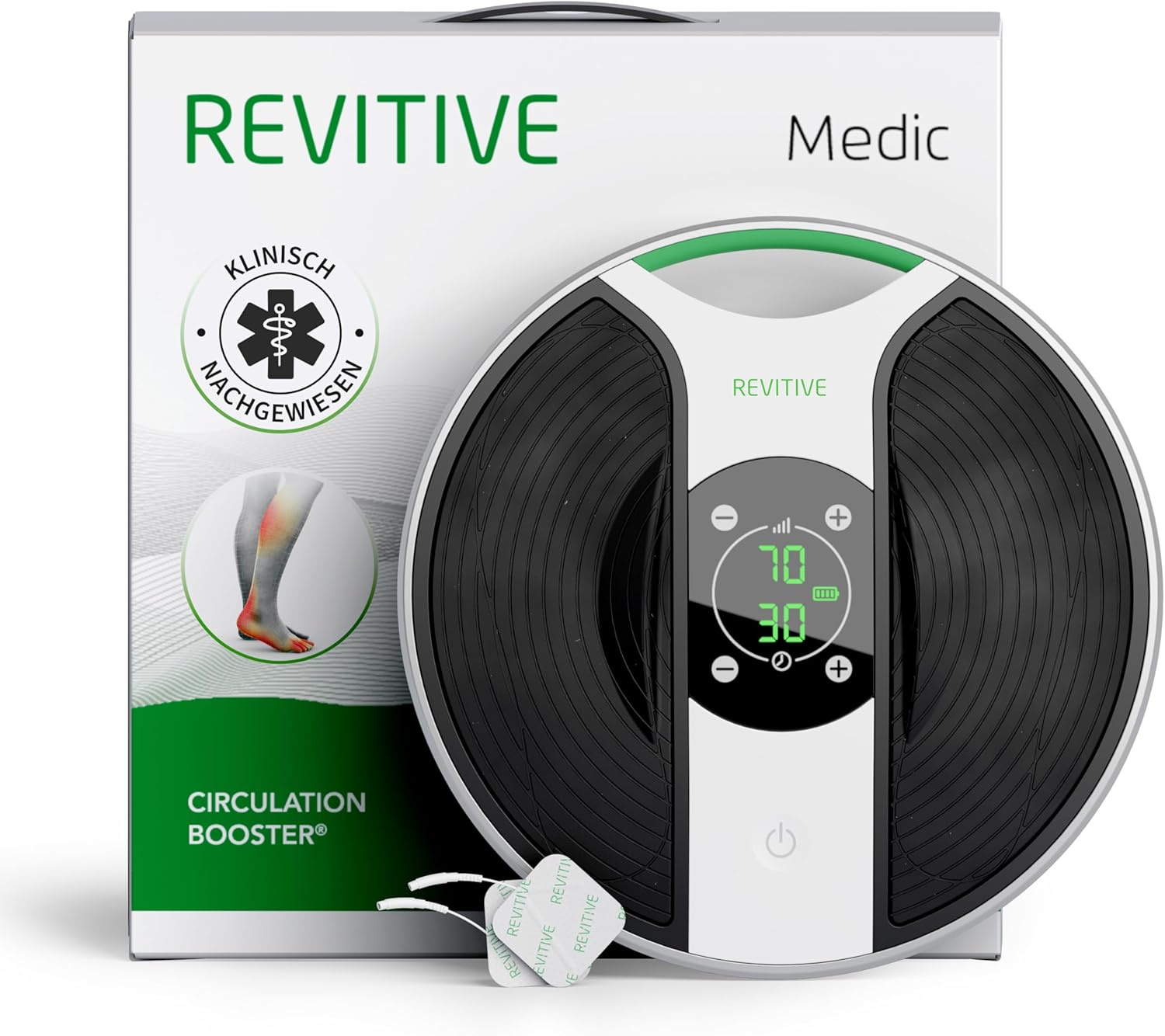
This product requires careful positioning and honest framing. The Revitive Medic is a circulation-focused device that uses electrical muscle stimulation (EMS) on the soles of the feet to promote blood flow in the lower legs. It is marketed primarily toward people with circulatory concerns, not specifically toward athletes. We include it here because some padel players ask about it, and it appears in recovery-related searches. But we need to be very clear about what this is and what it is not. This is NOT a standard recovery tool. It is NOT a massage device. It is NOT something most healthy padel players need. It occupies a niche space between medical device and recovery aid. The intended use case is for people who have been advised by a healthcare provider to improve lower-leg circulation. Some older players or those with specific vascular concerns may find it relevant. For the vast majority of padel players, this is not the right purchase. A foam roller, massage gun, or even a simple walk after your match will serve your recovery needs far better.
- Established brand in the circulation device category
- EMS technology for lower-leg blood flow
- May be relevant for players with specific circulatory concerns
- Simple to use — place feet on the device and activate
- NOT a standard recovery tool for athletes
- Very expensive for a highly specific use case
- Not designed specifically for sport recovery
- Should not be the first, second, or third recovery purchase
- Requires understanding of whether EMS circulation is relevant to your situation
- Does not replace any of the tools above for general padel recovery
Players with specific circulation concerns who have consulted a healthcare provider. Older players who have been advised to focus on lower-leg circulation. NOT for general padel recovery.
Specific use as directed by a healthcare professional. NOT for general post-match recovery.
Everyone who does not have a specific, identified reason to use it. Healthy padel players looking for recovery tools. Anyone who has not consulted a healthcare provider about circulation concerns. Anyone looking for their first, second, or third recovery purchase.
Essential vs Premium vs Niche
Know which category each tool falls into before you spend money
Three Tiers of Recovery Tools
Essential first buys: TriggerPoint Grid + Hypervolt Go 2
These two tools cover 90% of recovery needs for under 200 euros combined. The foam roller handles large muscle groups and daily maintenance. The massage gun targets specific spots and travels with you. Together, they form the foundation that every other tool on this page builds on. If your budget is limited, stop here. You are covered.
Premium upgrades: Normatec 3 + FIT KING Wireless
For players who have the basics covered and want more. Compression recovery is passive, comfortable, and feels great. The Normatec is the premium option for frequent players with budget. The FIT KING is the sensible alternative at a fraction of the price. Neither is necessary. Both are nice to have.
Niche tools: Miko Foot Massager + Revitive Medic
For specific situations, not general use. The Miko is for players with foot-specific recovery needs. The Revitive is for players with specific circulation concerns identified by a healthcare provider. Neither should be purchased before the essentials are covered.
Best Tool by Player Type
Find the right recovery setup for how you actually play
Frequent Player (3-5x/week)
Foam roller + massage gun as a minimum. These cover your daily recovery needs. Add compression if you want passive recovery on rest days. The more you play, the more important consistent recovery habits become.
Travel Player
Hypervolt Go 2 is the clear winner — fits in your padel bag, works in hotel rooms, quiet enough for shared spaces. The TriggerPoint is too bulky for flights. Prioritize portability over features.
Heavy Calves
Foam roller on calves daily — slow, deliberate passes. Massage gun for deep knots and specific tight spots. Compression for passive recovery on heavy days. This combination addresses calf fatigue from every angle.
Tired Feet
Foam roller or lacrosse ball under the feet for daily maintenance. Miko Shiatsu Foot Massager if budget allows and foot recovery is a consistent need. Address footwear and court shoes as the root cause.
Budget Player
TriggerPoint Grid only. Under 30 euros. Covers most recovery needs for most players. Add a massage gun when budget allows. Do not spend money on compression or niche tools until the basics are covered.
Premium Home Setup
TriggerPoint Grid + Hypervolt Go 2 + Normatec 3. The complete system. Foam roller for daily maintenance, massage gun for targeted work, compression boots for passive recovery. This is the setup that covers everything.
Before, During, and After Match
When to use which tool for maximum benefit
Recovery Tools Around Your Padel Sessions
Before the match
Light massage gun activation on calves and quads — 30 seconds per muscle group on the lowest setting. This is about waking the muscles up, not deep tissue work. Follow with a dynamic warm-up. Do NOT rely on passive tools or static stretching alone before play. The massage gun supplements your warm-up — it does not replace it. See our warm-up guide for the full routine.
After the match
Foam roller on calves, quads, and IT band — slow passes, 60 seconds per area. Massage gun on specific tight spots that the roller cannot reach. If your legs feel particularly heavy, compression boots or leg massager for 15-20 minutes of passive recovery. Light movement before sitting down — a five-minute walk helps more than immediately collapsing on the sofa. Hydrate. Eat. Then rest.
Travel and tournaments
Pack the Hypervolt Go 2. Use between matches — even five minutes of targeted calf and quad work helps more than nothing. If you have room, a small massage ball can substitute for the foam roller. Consistency matters more than duration. Five minutes between matches keeps your legs fresher than 30 minutes at the end of the day.
What I Would Buy First — And What I Would Buy Only Later
An honest buying order from most to least essential
The Honest Priority List
Buy first: TriggerPoint Grid (under 30 euros)
Universal benefit. Works on every muscle group padel loads. No batteries, no complexity. Lasts for years. The foundation of any recovery toolkit. If you do not own a foam roller, this is your first purchase, full stop.
Buy second: Hypervolt Go 2
Portable, versatile, targets specific areas the roller cannot reach. Fits in your padel bag for tournament use. Covers pre-match activation and post-match recovery. Together with the foam roller, you have 90% of your recovery needs covered.
Buy later: a compression system
Only if you play four or more times per week and want passive recovery. The Normatec if budget allows, the FIT KING if it does not. This is an upgrade, not a necessity. Make sure you are actually using the foam roller and massage gun consistently before spending on compression.
Buy only if needed: Miko Foot Massager
Only if feet are a specific, recurring problem that general rolling does not address. A foam roller or lacrosse ball under the feet works for most players. The Miko is for players where foot recovery is a persistent issue.
Buy only with medical guidance: Revitive Medic
Only if circulation is a diagnosed concern and a healthcare provider has recommended stimulation. This is not a general recovery tool. It serves a completely different purpose than everything else on this page.
Recovery Tools and the Complete System
Tools help — but the real system is bigger than any product
These tools help. We use them. We recommend them. But the real recovery system is not something you can buy.
The real system is: sleep (7-9 hours, non-negotiable), nutrition (adequate protein, hydration, real food), progressive loading (not playing through pain or fatigue), strength training (the single most effective injury prevention tool), and proper rest days (recovery happens when you stop, not when you add more).
A massage gun after a match helps. Eight hours of sleep helps more. A foam roller on your calves is smart. Progressive strength training for your legs is smarter. Compression boots feel wonderful. Actual rest days do more.
Build the foundation first. Then add the tools. See our recovery guide, injury prevention system, and strength training guide for the complete picture.
Recovery Tools FAQs
The questions padel players ask most about recovery tools
Are compression boots worth it for padel players?
They feel great and the perceived recovery improvement is strong — players consistently report less soreness and leg heaviness after use. However, the evidence for actual measurable performance improvement from compression alone is more debatable. Compression boots are worth it for players who play 4-5 times per week and have the budget for a premium upgrade. They are not necessary for casual players who play 1-2 times per week — a foam roller and massage gun cover most recovery needs at a fraction of the cost.
Is a massage gun enough for recovery?
A massage gun is a strong starting point, especially when combined with a foam roller. Together, these two tools cover the vast majority of recovery needs for padel players. The massage gun targets specific tight spots while the foam roller handles large muscle groups. Compression is a nice upgrade for frequent players, but it is not a requirement. Most players will get excellent results from just a foam roller and massage gun used consistently.
Is a foam roller better than a massage gun?
They are different tools that complement each other. A foam roller covers large muscle areas efficiently — calves, quads, IT band, upper back. A massage gun targets small, specific spots with precision. If you can only buy one, start with the foam roller — it is cheaper, more versatile, and covers more ground. Then add the massage gun when budget allows. The ideal setup is both.
What helps heavy calves after padel?
Foam rolling immediately after the match — slow, deliberate passes on the calves for 60 seconds per leg. Massage gun on specific tight spots or knots. Elevation — put your feet up for 15-20 minutes. Compression if you have a device available. Hydration before, during, and after play. And sleep — the most underrated recovery tool of all. If heavy calves are a recurring problem, also look at your calf loading in training and whether you are building up match frequency too quickly.
Are foot massagers worth buying?
Only if your feet are a consistent problem after padel. Not every player needs foot-specific recovery. If your soles ache regularly, you have plantar fasciitis tendencies, or your heel is chronically sore after matches, a dedicated foot massager can help. But for most players, rolling a foam roller or lacrosse ball under the feet provides adequate foot maintenance without the additional cost.
Who should avoid circulation stimulation devices?
Anyone without a specific medical reason to use one. Devices like the Revitive Medic are positioned as medical-grade circulation aids, not general sport recovery tools. They are designed for people with identified circulatory concerns, not healthy athletes looking for post-match recovery. If you are a healthy padel player, start with a foam roller and massage gun. Only consider circulation stimulation devices if a healthcare provider has specifically recommended one for your situation.
How long should I use a massage gun after a padel match?
2-3 minutes per muscle group is sufficient for post-match recovery. Focus on the calves, quads, hamstrings, and upper back — the muscles that work hardest in padel. Use a slower, deeper stroke rather than fast surface passes. Do not use the highest intensity setting on already-fatigued muscles — start at medium intensity and increase only if the muscle responds well. The Hypervolt Go 2 at medium speed for 10-12 minutes total covers the major groups after a normal match.
Is foam rolling better than a massage gun for padel recovery?
They target slightly different things. Foam rolling covers larger muscle surfaces and is better for broad tension release — particularly along the ITB, calves, and lower back. Massage guns deliver targeted percussion to specific trigger points and knots that a roller passes over. For padel players who can only choose one, a foam roller is the more versatile first buy. If you already have a roller and want to add a tool, the massage gun extends what you can reach (upper traps, glutes, smaller arm muscles).
When should I NOT use a massage gun or foam roller?
Do not use massage tools directly on acute injuries — a freshly sprained ankle, a swollen knee, or a torn muscle in the acute phase (first 48-72 hours). These tools are for recovery from training load, not for treating injuries. If you have swelling, significant bruising, or pain that is getting worse rather than better, see a physiotherapist before using any massage tool on or near that area. The same applies to joints — roll and percuss the muscle belly, not directly on joint structures.
Recover Smarter. Play More. Invest in What You Will Actually Use.
The best recovery tool is the one that becomes a habit. Start with the basics — a foam roller and a massage gun. Build from there only when you have outgrown them. Recovery is a system, not a single purchase.
See Our Full Recovery Guide →
