
PADEL RECOVERY GUIDE
Post-match recovery protocols, sleep, nutrition — the tools that actually shorten the rebound between sessions and keep you playing more.
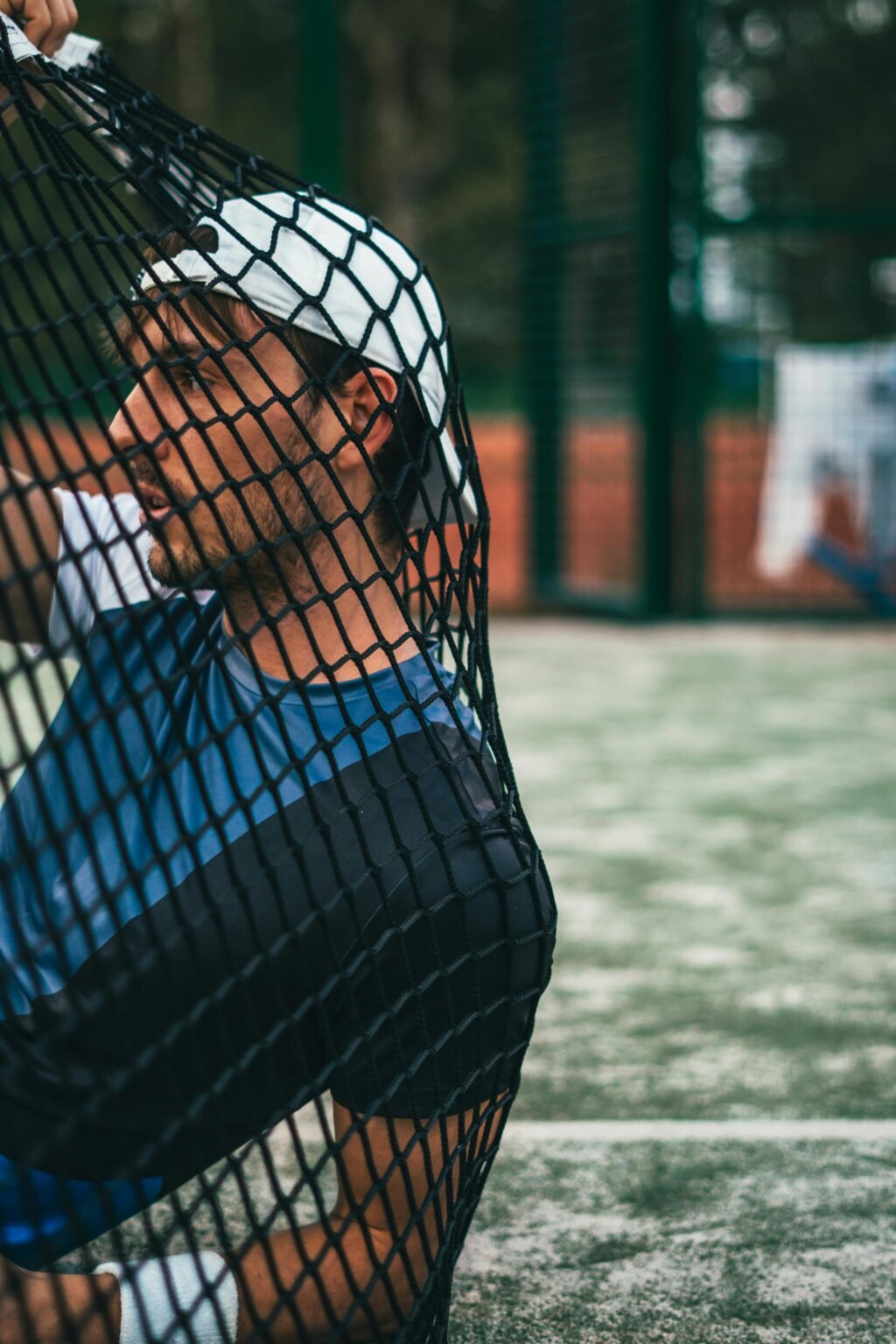
You don’t improve when you train. You improve when you recover.
The 5 Pillars of Padel Recovery
From the final point to the next match — what to do and when
Stack All Five and You Play Twice as Much With Half the Pain
Recovery is not one thing. It’s layers. Each pillar covers a different time window after a match — and each one matters.
Pillar 1 — Immediate (0–5 minutes after match)
Do not sit down and do not grab a beer yet. Walk for 3–5 minutes. Sip water with electrolytes. Let your heart rate come down gradually. This simple habit cuts next-day soreness significantly by flushing waste products from the muscles.
Pillar 2 — Same-day recovery (within 2 hours)
Eat real food within 60–90 minutes — protein + carbs, not just a protein shake. Rehydrate properly. Do 5–10 minutes of gentle mobility work (calves, hips, thoracic spine). Cold shower optional. Sleep early.
Pillar 3 — Next-day recovery (24 hours after)
This is when most players screw up. You feel “okay” so you play another match at full intensity. Don’t. Light activity — walk, swim, easy bike — flushes soreness and speeds repair. Save the full-intensity session for day 2 or 3.
Pillar 4 — Weekly recovery rhythm
Your week needs one lighter session and one full rest day. That’s not weakness — that’s how your body gets stronger. Without this rhythm, cumulative fatigue builds until something tears.
Pillar 5 — Deep recovery (monthly)
Every 4–6 weeks, schedule a deload week — half the sessions, lower intensity. Your joints, tendons, and nervous system need it. Pro players do this religiously. Amateurs skip it and wonder why they always plateau.
The 10-Minute Post-Match Recovery Routine
This is the exact routine we use after every match in Zanzibar. It takes ten minutes, it fits into a normal evening, and it’s the single biggest difference-maker for playing pain-free multiple times a week.
You don’t need equipment. You don’t need a mat. You can do it at the court, in the parking lot, or at home before dinner.
- Walk it out — 3 minutes, easy pace
- Calf + ankle mobility — 60 seconds each side
- Hip flexor opener — 60 seconds each side
- Thoracic rotations — 10 each side
- Hamstring stretch — 60 seconds each side
- Water + electrolytes — throughout
The players who stay on court the longest are not the ones who train the hardest. They’re the ones who recover the smartest.
The Recovery Mistakes That Kill Most Amateur Seasons
1. Playing two intense matches back-to-back
Wednesday night singles, Thursday morning doubles at full intensity. Your tendons haven’t finished repairing from session one. This is the single most common cause of recurring elbow, knee, and calf problems.
2. Skipping sleep
Sleep is the most powerful recovery tool you have — and it’s free. Players who consistently sleep less than 7 hours get injured significantly more often. Protect your sleep like you protect your racket.
3. Ignoring hydration and food
You lose 1–2 liters of fluid per match in a warm climate. If you don’t rehydrate properly, your next session starts with the muscles already compromised. Same with protein intake — if you don’t eat enough, your body can’t rebuild.
4. Treating soreness as a badge of honor
Normal soreness = diffuse, symmetrical, peaks 24–48 hours after, gone by day 3. Pain = sharp, localized, gets worse with movement. Learn the difference. Pushing through pain is how small problems become chronic injuries.
Normal Soreness vs Warning Pain
The single most important skill in recovery is knowing when to push through and when to stop. It’s simple once you learn the pattern — and it protects you from the injuries that end seasons.
If any of the warning-pain signs appear, stop playing, ice the area, and see a physiotherapist if it’s not better in 48 hours.
- NORMAL — diffuse muscle soreness across a group
- NORMAL — symmetrical (both calves, not one)
- NORMAL — peaks 24–48h after, fades by day 3
- WARNING — sharp, localized, pinpoint pain
- WARNING — swelling within an hour of play
- WARNING — pain that wakes you up at night
- WARNING — same pain returning every match
How Often Should You Play Padel?
The sweet spot for most amateur players
Three to four sessions per week is the sweet spot for most players over 30. Enough to improve, enough to feel the addiction, not so much that your body breaks down. Mix intensities — not every match needs to be competitive.
If you play more than four times a week, at least one session should be light — drills, touch practice, easy rallies. The goal is movement without stress. Your tendons will thank you in 6 months.
Layer it with strength and mobility
Two short strength sessions per week + daily mobility work + a real warm-up before every match — that’s the complete framework. Recovery is just the connective tissue between all of it.
Where the Muscle Activation Spray Fits
Pre-match prep, not recovery
One quick note: our Muscle Activation Spray is for the 3 minutes before a match, not after. It doesn’t replace recovery — it complements a proper warm-up. For post-match recovery, the tools you need are real food, sleep, hydration, and mobility work. Nothing fancy.
Padel Recovery FAQs
The most common recovery questions from our community
How long should I rest between padel matches?
For most players, at least 24 hours between intense sessions. If you’re playing 4+ times a week, alternate one intense session with one lighter one. Always take one full rest day per week — no exceptions.
Is ice or heat better for recovery?
Ice for acute injuries in the first 48 hours (swelling, sharp pain). Heat for chronic tightness and general muscle stiffness. For normal post-match soreness, neither is essential — movement + sleep does more than either.
What should I eat after a padel match?
Real food within 60–90 minutes. Protein + carbs — chicken + rice, eggs + toast, a proper meal, not just a shake. Hydrate with water + electrolytes. Skip alcohol on intense playing days — it blocks recovery for 24 hours.
Do I need a foam roller or massage gun?
Nice to have, not essential. A foam roller helps with calves, quads, and upper back. A massage gun can speed up recovery between sessions. Neither replaces sleep, hydration, and proper mobility work — those come first. For the full shortlist of what actually helps (and what to skip), see our padel gear decision hub.
How do I know if I’m overtraining?
Signs: resting heart rate up, sleep disturbed, motivation gone, small injuries piling up, performance dropping. If three or more are happening, take a full deload week — 50% volume, 50% intensity. Your body will thank you. If you want objective data behind these signals (HRV, recovery score, sleep quality), a recovery wearable like WHOOP or Oura can help — see our best wearables for padel players guide for honest picks.
Recover Smart. Play More. Stay on Court.
Recovery is the easiest part of the system to get right — and the one most players ignore. Start with the 10-minute routine after your next match. Then layer the rest in. Your body will adapt fast.
See the Prevention System →Working through recovery and want specialist guidance? We have vetted padel injury specialists in Spain — named clinicians, verified credentials, no paid listings.
Find a trusted padel injury specialist in Spain →In short: The biggest recovery win isn’t fancy supplements—it’s sleeping eight hours and icing your shoulders and knees for fifteen minutes after matches. Most padel injuries come from inflammation building up over weeks, not one dramatic moment. If you play three or more times weekly, you need active recovery days with light stretching. Your serve shoulder takes the most beating, so prioritize that.
FROM OUR COACHING TEAM
In our experience, post-match recovery separates good padel players from elite ones. We’ve found that within two hours of finishing, our players prioritize protein-rich meals with carbs to replenish glycogen stores. We know quality sleep—aim for seven to nine hours—is non-negotiable; we’ve seen dramatic performance improvements when players commit to consistent sleep schedules. Our approach includes ice baths or contrast therapy when needed, but honestly, what we recommend most is consistent nutrition and sleep. These fundamentals work.
What the evidence says
What the research actually supports about recovering from padel injuries — including where the evidence is weaker than people assume.
| What the research shows | Certainty | Source |
|---|---|---|
| Return to play for Achilles tendinopathy is highly individualized and criteria-based, requiring minimal pain (1-2/10) during daily walking, acceptable pain during single-legged hopping, and no reactive pain… | ModerateLevel 1a | jospt.orgguideline |
| Return-to-play after Achilles tendon rupture is strictly criteria-based (typically 6-12+ months), requiring pain-free status, full symmetrical ankle ROM, calf strength/endurance at least 80-90% of the… | ModerateLevel 1a | aaos.org |
| The acute/protection phase (Phase I) of meniscal tear rehabilitation focuses on protecting the knee, controlling pain and swelling, restoring normal knee extension, and eliminating effusion. | ModerateLevel 1a | wwl.nhs.uk |
| Progression from Phase I to Phase II of meniscal tear rehabilitation requires resolution of significant pain and swelling, ability to achieve full knee extension, and good quadriceps activation without pain. | ModerateLevel 1a | wwl.nhs.uk |
| ACL rehabilitation is criterion-based, typically starting with an immediate post-injury/post-operative phase (e.g., 0-2 weeks) focused on pain/swelling reduction and restoring full passive knee extension, with… | ModerateLevel 1a | professionalpt.comguideline |
| Return-to-play (RTP) after ACL injury should be based on objective functional criteria, including a quadriceps strength index (QSI) of at least 80-90% and hop test performance ≥90% of the contralateral limb. | ModerateLevel 1a | jospt.orgguideline |
| Rehabilitation for neck pain progresses through phases: Acute/Pain Relief, Subacute/Restoration of Function, Strengthening/Return to Activity, and Return to Sport/Prevention. | ModerateLevel 1a | jospt.orgguideline |
Certainty follows the GRADE approach — how confident the research lets us be, not how confident we feel. Level 1a/1b are systematic reviews and randomised trials; level 2 are cohort studies. Drawn from our database of 831 cited facts; every row links to its primary source so you can check it yourself.
Every recovery guide on Padel Revive
All 27 guides in this section, grouped so you can find the one that matches your situation. Each links straight to the full article.
Immediate recovery
- Heat Therapy for Padel Players Learn how to use heat therapy for padel recovery — when to apply it, which muscles benefit most, and how to avoid…
- Recover Between Matches How to recover between padel matches on the same day. The practical timeline, 3 priorities, and what actually…
- Ice Bath After Padel Should you take an ice bath after padel? This evidence-based guide covers the exact temperature, timing, and…
- Ice vs Heat Ice vs heat for padel injuries — exactly when to use cold therapy, when to switch to heat, and which common padel…
- Padel Post-Match Stretching The exact static stretching routine for after a padel match. Covers the 5 key areas, 30-45 second hold times, and…
- Recovery After Match The exact post-match recovery routine for padel. What to do in the first 30 minutes to reduce soreness, speed up…
Sleep, travel & lifestyle
- Travel Recovery The complete travel recovery system for padel players. What to pack, how to recover between tournament days, and…
- Power Napping for Padel Recovery Discover how a strategic power nap boosts padel performance — reaction time, endurance, and mental sharpness…
- Rest Days for Padel Players How many rest days padel players need, what to do on them, and how to structure your training week around recovery…
- Sleep Recovery Sleep recovery for padel players — the 6 rules that maximize overnight muscle repair, reduce injury risk, and…
Tools & modalities
- Compression Therapy for Padel Recovery How compression garments, pneumatic compression boots, and compression socks help padel players recover faster…
- Cryotherapy for Padel Recovery Discover how cryotherapy helps padel players recover faster — reduce soreness, cut inflammation, and get back on…
- Padel Foam Rolling Foam rolling after padel reduces muscle soreness and speeds up recovery. This guide gives you the exact areas to…
- Padel Massage Therapy Sports massage accelerates padel recovery, reduces DOMS, and keeps the muscle groups that padel stresses most —…
- Sauna Recovery for Padel Players How sauna use accelerates padel recovery — heat shock proteins, cardiovascular adaptation, mental reset, and the…
- Sports Massage Guide for Padel Players The complete sports massage guide for padel players — when to book, what to ask for, and how massage accelerates…
All recovery guides
- Cold Water Immersion for Padel Recovery Ice baths, cold showers, and cold water protocols for padel players. When CWI accelerates recovery, when it blunts…
- Contrast Therapy for Padel Players Hot and cold contrast therapy for padel: how to use it after matches to flush soreness, speed recovery, and get…
- Daily Mobility Routine for Padel Players A complete daily mobility routine for padel players — improve range of motion, reduce injury risk, and move better…
- Dry Needling for Padel Players Discover how dry needling treats padel injuries fast. We cover what it is, which injuries respond best, and what…
- Mental Recovery for Padel Players How to recover mentally between padel sessions — sleep, stress management, cognitive load, and the psychological…
- Padel Active Recovery Complete rest is the wrong approach for most padel players. This guide explains why light movement accelerates…
- Physiotherapy Guide for Padel How physiotherapy treats padel injuries: assessment, rehab stages, and return-to-play. Evidence-based guide for…
- Taping Guide for Padel Injuries Learn how to use KT tape for padel injury taping — wrist, elbow, shoulder & ankle. Step-by-step techniques used by…
- Recovery Nutrition for Padel Players What and when to eat after padel to accelerate recovery. Protein timing, carb replenishment, anti-inflammatory…
- Red Light Therapy for Padel Recovery Does red light therapy (photobiomodulation) actually work for padel recovery? Evidence, wavelengths, protocols…
- Stretching for Recovery in Padel Static stretching, PNF techniques, and a 12-minute post-match recovery routine for padel players. Covers timing…

