
BEST PADEL BAGSEleven Bags, Each With a Reason
You arrive at the club with a racket half out of the bag, wet shoes against your clean shirt and no idea where the overgrips went. The right bag fixes that. Here are eleven padel bags from Bullpadel, NOX, Siux, Babolat and Palbea, each labelled with who it suits, what the listings say about racket space, thermal compartments and shoes, and what we could not confirm.
See the eleven bagsBAGS, EACH LABELLED — a “best for” label on every one, so you can choose by how you play and travel
BAG FORMATS — paddle bag, backpack and large kit bag: pick the format before the brand
INDEPENDENT TESTS OF THERMAL LINERS — we found none, so we say what is claimed and what is not shown
In short: choose the format first. A paddle bag suits one or two rackets, a backpack suits walking or public transport, and a large kit bag suits three or four rackets plus shoes. Of our eleven, the Bullpadel BPP-24019 Elite is the best documented for a full kit, the BPP-24015 Tour is the plain two-racket option, and several others have specs we could not confirm, which we flag on each card. A thermal compartment may help, but we found no independent test of one.
How we picked: we researched manufacturer specifications, retailer listings and specialist reviews. We did not test these products ourselves, and where a detail could not be confirmed we say so. Last updated: 11 Oct 2026.
As an Amazon Associate I earn from qualifying purchases. Links marked Ad are affiliate links. Where we show a price it is the manufacturer’s recommended retail price (RRP) on the date stated beside it, never Amazon’s price. A price marked “Street price” is the price on the named retailer’s own product page on the date stated beside it; it is not Amazon’s price and not the manufacturer’s RRP, and it may have changed.
Quick picks: our top 3
The three best-supported picks first. Every product on the page is still below, grouped by use.
- 1. Best for carrying a full kit
The best-documented bag here: room for up to four rackets, two thermal compartments and a ventilated shoe space, as the retailer listing describes it.
- 2. Best large bag that also works as a backpack
A large bag for four rackets that also converts to a backpack (retailer listing), with a thermal compartment for two rackets.
- 3. Best simple bag for club play
A plain paddle bag for up to two rackets with no thermal compartment: a simple option for club play.
The Eleven at a Glance
Figures are as listed by retailers; “Not confirmed” means we found nothing we could trust
| Product | Format | Rackets (as listed) | Thermal compartment | Shoe compartment | |
|---|---|---|---|---|---|
| Bullpadel BPP-24019 Elite | Large paddle bag | Up to 4 (retailer) | Yes, two compartments (retailer) | Yes, ventilated (retailer) | Check today’s price on Amazon → Ad |
| NOX ML10 Team BPML10TE | Large bag, convertible to backpack | 4 (retailer) | Yes, for 2 rackets (retailer) | Not stated | Check today’s price on Amazon → Ad |
| Bullpadel BPP-24015 Tour | Paddle bag | Up to 2 | No | No (shoes go in the main compartment) | Check today’s price on Amazon → Ad |
| Bullpadel BPMEX004 Tour Rucksack | Backpack | Not stated | Not stated | Not stated | Check today’s price on Amazon → Ad |
| Siux Diablo Sanyo SS24 | Paddle bag | Not confirmed | Two thermal side pockets (retailer) | Not stated | Check today’s price on Amazon → Ad |
| Babolat Court S Juan Lebron | Compact bag | Shops disagree (2 to 4) for the Court S | Shops disagree | Shops disagree | Check today’s price on Amazon → Ad |
| Bullpadel Avant S Gold Carbon | Mid-size kit bag | Not confirmed for this edition | Avant S: two thermal pockets (retailer) | Avant S: ventilated shoe space (retailer) | Check today’s price on Amazon → Ad |
| Bullpadel Tour Black BPPEX007 | Bag (Tour range) | Not confirmed | Not confirmed | Not confirmed | Check today’s price on Amazon → Ad |
| Bullpadel Avant BPPEX005 | Bag (Avant range) | Not confirmed | Not confirmed | Not confirmed | Check today’s price on Amazon → Ad |
| NOX Pro Series Bag | Bag (NOX Pro Series) | Not confirmed | Not confirmed | Not confirmed | Check today’s price on Amazon → Ad |
| Palbea P-Bag | Bag (listing says “compartment racket”) | Not confirmed | Not confirmed | Not confirmed | Check today’s price on Amazon → Ad |
Our Eleven Bags, One by One
Grouped by use; the best-documented bag leads its group
Bags with thermal racket compartments
Paddle bags whose listings mention thermal racket compartments or pockets. Details are as listed by retailers.
Bullpadel BPP-24019 Elite

The best-documented bag in our line-up and the one to look at if you carry three or four rackets plus shoes and a change of clothes. The retailer listing we read describes two thermal racket compartments, a separate ventilated shoe compartment, PU leather and padded backpack straps as well as a top handle. It is a big bag, so it suits players who drive or have a locker rather than people squeezing onto a train with it.
- Room for three or four rackets and a full kit
- Separate ventilated shoe space, so wet shoes stay away from the rest
- Backpack straps and a top handle, so you can carry it two ways
- Large: more bag than a one-racket player needs
- PU leather outer (retailer wording)
- The spec we read was for a different colour than your Amazon link may show
Siux Diablo Sanyo SS24

A bag from the Siux Diablo line in the Sanyo signature design for the 2024 season, which we picked for players who want something that looks different from the usual Bullpadel and NOX shapes. A Spanish retailer describes a central compartment with two thermal side pockets. We saw one other shop claim a very large racket capacity but could not trust it, so we do not give a number.
- Different look from the big-two brands
- Thermal side pockets described by a retailer
- Siux is a padel-specialist brand
- Racket capacity and dimensions not confirmed
- Shoe compartment not mentioned
- A 2024-season design, so check it is still the version on offer
Bullpadel Avant S Gold Carbon

The Gold Carbon edition of the Avant S, which is the bag we picked for players who want a mid-size kit bag with a bit more style. A retailer lists the standard grey Avant S at 58 x 30 x 30 cm with two thermal pockets and ventilated shoe space, and we expect this edition to be similar, but we have not read a spec for the Gold Carbon itself, so please do not treat the Avant S figures as confirmed for it.
- Mid-size kit bag format
- The standard Avant S is listed with thermal pockets and shoe space
- A more distinctive finish than the plain Tour bags
- Gold Carbon spec not confirmed
- Colour and finish are a matter of taste
- Racket count not confirmed
Backpacks and convertibles
For match days and commuting: from a light one-racket rucksack to a large bag that converts to a backpack.
NOX ML10 Team BPML10TE

A big, team-style bag that a retailer lists at 55 litres, with a main compartment for four rackets and a separate thermal compartment that NOX calls ThermoTech for two rackets and bottles. It can be carried as a backpack, which is the reason we picked it for players who want capacity but do not want to hand-carry a duffel. We only have a single retailer listing for these figures and it showed a black and clay version, while your link is the white and grey one.
- Big capacity with a dedicated thermal compartment
- Carries as a backpack as well as a bag
- Side compartment keeps small items separate
- A shoe compartment is not mentioned in what we read
- Single-source spec, not a NOX page
- Large and likely heavy once packed
Bullpadel BPMEX004 Tour Rucksack

A black Bullpadel backpack for players who want to walk, cycle or take public transport to the court. The only description we found is thin: a large main compartment for a racket, clothes and a towel, a small extra pocket and padded shoulder straps, and it came from a retailer page for a related Tour backpack rather than this exact code. We chose it as the light, no-fuss option. Treat the details as unconfirmed until you have read the Amazon page.
- Backpack carry keeps the load on both shoulders
- Suited to a light kit: racket, clothes, towel
- Black, plain and easy to match
- No racket count, litres or dimensions found
- Thermal and shoe compartments not mentioned
- Probably too small for a full kit
Simple and compact bags
Plainer or smaller bags for club play and lighter kit.
Bullpadel BPP-24015 Tour

A plain two-racket bag with no frills, and that is why it is here. We read the retailer page for this one: it holds up to two rackets in a padded compartment, is made of 600D polyester and has a pocket on the outside. It has no thermal lining and no shoe compartment, so shoes share the main space. If you play a couple of times a week, carry one or two rackets and a towel, this is the straightforward choice.
- Simple and light-looking for one or two rackets
- Padded racket compartment
- Exactly what the listing says it is: no hidden surprises
- No thermal compartment
- No separate shoe space
- Not for players who carry three or more rackets
Babolat Court S Juan Lebron

A compact bag from Babolat, a brand most players already know, in the Juan Lebron edition. Be aware that the Amazon listing is titled “Padel Court Lebron” in purple and we found no page that calls this exact bag a “Court S Lebron”, so we describe it by the Court S model it appears to be based on. Shops list that Court S at about 49 x 26 x 30 cm and 35 litres with a recycled-PET outer, but disagree on whether it holds two, three or four rackets and whether it has a shoe or thermal compartment.
- Compact size for a lighter kit
- Babolat is a well-known racket brand
- Recycled-PET outer according to a shop listing
- Our sources conflict on capacity and compartments
- Lebron edition not confirmed against the Court S spec
- Compact means less room for a full kit
More bags, specs to confirm
Thinner documentation: we could not confirm several specs, so open the Amazon listing and check before you order.
Bullpadel Tour Black BPPEX007

A black bag sold under the Bullpadel Tour name, for players who prefer an all-black look over the coloured club bags. We could not find a spec page for the BPPEX007 code, so we cannot tell you how many rackets it takes or what compartments it has. We include it because the choice is yours and the link works, and we say plainly what we could not check.
- Plain black look
- From the Bullpadel Tour range, the club-level line
- Same brand as two other bags on this page, so you can compare spec sheets
- No spec found, so we cannot compare it fairly
- Compartments and capacity unconfirmed
- Overlaps with the other Bullpadel Tour bags
Bullpadel Avant BPPEX005

A black Bullpadel Avant bag. The Amazon title reads “Avant Bppex005 Padel Black”, and we found no spec page for that code. The related Avant S is listed by one retailer with two thermal pockets and ventilated shoe space, but we will not transfer that to this bag. We picked it for players who like the Avant look and want it in black; the details are yours to confirm on the listing.
- Avant range look, in black
- Part of the Bullpadel line, so it is easy to compare with the Avant S
- Plain colour that goes with any kit
- No spec found for the BPPEX005 code
- Capacity and compartments unconfirmed
- Overlaps with the other Bullpadel bags
NOX Pro Series Bag

A black NOX bag listed on Amazon as “nox Pro Padel Bag Black”. We could not find a spec for it beyond a retailer price listing, and the words “Pro Series” are not in the Amazon title, so we describe it generically. It sits here for players who want a NOX bag but not the larger ML10 Team. Read the listing carefully: it is the least documented NOX option.
- NOX is a padel-specialist brand
- Black, plain colour
- A second NOX choice beside the ML10 Team
- No spec found at all
- Whether it is the “Pro Series” is not confirmed by the Amazon title
- Capacity and compartments unknown
Palbea P-Bag
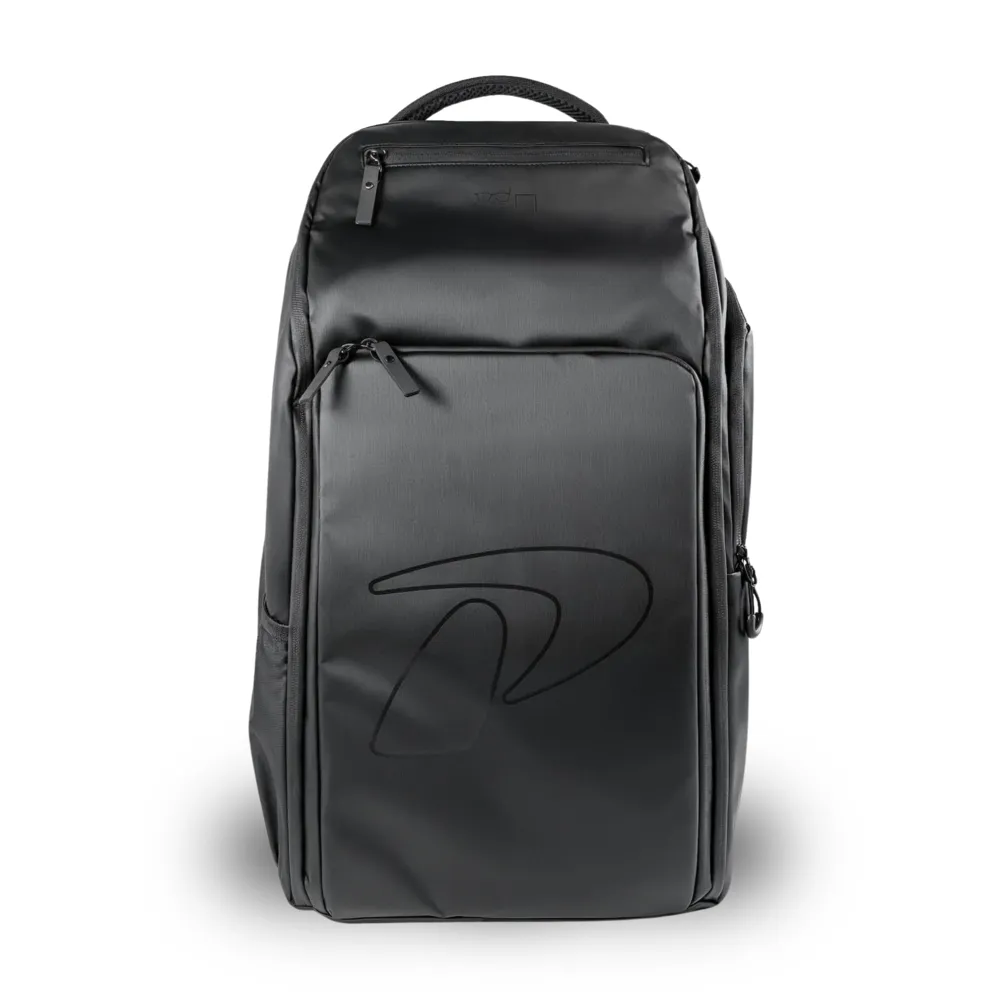 Image: Palbea
The least documented bag here. The Amazon title is “Palbea P Bag Padel Compartment Racket”, and in two searches we found no page about the brand or the model. We still include it because you asked for wide choice, and a less common brand can be a good find, but we cannot tell you anything about the build. We would only buy it after reading the full Amazon listing and recent customer reviews.
- A different brand to the usual names
- The title mentions a racket compartment
- Gives you one more option to compare
- No independent information found
- Build, size and compartments unknown
- Not a bag we can vouch for
Which Type of Padel Bag?
Format first, then brand
The paddle bag: one or two rackets
A paddle bag (the Spanish name is paletero) is a long, slim carry bag built around the rackets. It suits players who take one or two rackets, a towel and a few balls, and who leave the rest at home or in the car. Among our picks the Bullpadel BPP-24015 Tour is the clear example. It is easy to carry by hand or on one shoulder, but it has little room for shoes and clothes.
The backpack: walking, cycling, public transport
A backpack spreads the weight over both shoulders, so it is the natural choice if you walk, cycle or take a train to the court. A backpack-style padel bag keeps rackets in a dedicated sleeve and clothes in the main space. The Bullpadel BPMEX004 Tour Rucksack is our light option, and the NOX ML10 Team and the BPP-24019 Elite can both be carried on your back as well.
The large kit bag: three or four rackets and everything else
The largest bags on this page, the BPP-24019 Elite and the NOX ML10 Team, are listed for four rackets plus shoes or bottles. They suit players who play several sessions a day, coach, or travel to tournaments by car. A full kit bag gets heavy. We found no study linking bag carrying to padel injuries, so this is common sense rather than evidence, but a heavy bag on one shoulder is no help to a sore neck or shoulder, and a two-strap carry or a lighter load is kinder. If your shoulder is already bothering you, our padel shoulder pain guide is the place to start.
Do You Need a Thermal Compartment?
What is claimed, and what is shown
The claim
Bag makers and shops say a padel racket has a foam core that is sensitive to temperature: heat can soften it and cold can make it hard, and an insulated or “thermal” compartment slows down how fast the racket warms or cools. One retailer adds that such a compartment is not perfect protection. That is sensible in principle, but every source we found for it is a shop or a maker. We found no independent test, no figure for how long a racket survives in a hot car and no comparison of an insulated compartment with a plain one.
What we would actually do
Do not leave your rackets in a hot car boot or in direct sun, and do not leave them in a freezing car overnight either. In our view that does more than any lining can. We did not find racket-maker care instructions to quote, so check the care notes that came with your racket. If a thermal compartment comes with the bag you like, good; we would not pay extra for it on faith, and we do not count it as proven.
Every thermal claim on this page, such as “two Thermo compartments” or “ThermoTech”, is the maker’s or a retailer’s wording. We repeat it so you know what the listing says, not because we have measured it.
What to Check Before You Buy
Six checks that decide whether a bag works for you
How many rackets
Count what you really carry. Listings range from two rackets to four.
Shoe space
A separate, ventilated shoe compartment keeps wet shoes away from clean kit. Not every bag has one.
Carry style
Backpack straps, a shoulder strap or a top handle: pick the one you will use on your actual route to the court.
Thermal compartment
Claimed by makers and shops, not independently tested. Treat it as a bonus.
Pockets
An outside pocket for keys and a phone, and room for bottles and grips, save you digging through the bag.
Exact model and colour
Several of our links show a colour or edition that differs from the spec we read. Check the Amazon page first.
Packing and Caring for Your Bag
Small habits that protect the kit inside
Packing order
Put the rackets in their compartment first, so they sit against the back panel of a backpack. Shoes go in their own compartment where there is one, otherwise in a plastic bag away from clothes. Keep grips, overgrips and your phone apart from bottles, and keep the load as even as you can so the bag does not pull to one side.
After the session
Take wet clothes and towels out when you get home, and leave the bag open for a while so it can dry. A bag zipped shut with damp kit inside is how a bag starts to smell. Store it somewhere cool and dry, away from radiators and out of a parked car. For the grips inside it, see our guide to padel overgrips.
You know the feeling: you arrive at the court, dig through a bag with no logic to it, and the grips are under a wet towel. Most players don’t realise how much calmer the first ten minutes feel when the kit has a place. What actually works is boring: the right size bag, shoes in their own space, rackets out of the car. We have been through the other way and do not recommend it.
Who This Is For
Players who carry one to four rackets and want a bag matched to how they travel
Anyone who has crushed a racket in a generic gym bag and wants proper racket space
Shoppers who want wide choice and are happy to check the spec on Amazon before ordering
Frequently Asked Questions
What size padel bag do I need?
Match it to what you carry. One or two rackets and a towel fit a paddle bag, a backpack suits walking or public transport, and three or four rackets plus shoes call for a large kit bag. Listings for our eleven bags range from two rackets to four.
Do padel bags need a thermal compartment?
It is claimed to slow temperature changes around the racket core, but every source we found for that is a maker or a shop, and we found no independent test. Keeping your rackets out of a hot car or a freezing one does more than any lining, in our view.
Can I use a tennis bag for padel?
You can, and it will carry the rackets, but padel rackets are shorter and wider than tennis rackets, so they may sit loose in a tennis sleeve. A padel bag is designed around them. If you already own a large tennis bag it is a fine stop-gap.
Do I need a separate shoe compartment?
It is not essential, but it keeps wet or dirty shoes away from your clean clothes and grips. Among our picks, the retailer listings describe a ventilated shoe compartment on the BPP-24019 Elite and on the Avant S; the BPP-24015 Tour has none.
Which bag has the best documented specs?
The Bullpadel BPP-24019 Elite, followed by the BPP-24015 Tour and the NOX ML10 Team. For several others we found no spec page, and the cards say so.
Keep Reading
Build Your Full Recovery Plan
Shoulder Pain in Padel
Diagnosis, causes, and what is actually happening in your body.
Recovery Hub
Post-match recovery, sleep, nutrition, and return-to-play.
Prevention Hub
Warm-up, mobility, strengthening — stop injuries before they start.
Best Padel Rackets
The gear that actually helps — picked and explained.

