
BEST PADEL RACKETSSeven Rackets, Each With a Reason
These are the seven rackets we picked for the 2026-27 season: Bullpadel’s new 2027 range, Nox’s Tapia models, adidas and the HEAD Coello. We say what is new, who each one suits and, because most of them are advanced rackets, which one to pick if you are a club player and where to go if you are still learning.
See the seven racketsRACKETS, ALL EXPLAINED — each with a “best for” label, what is new and what limits it
ARE ADVANCED-LEVEL — by the makers’ and sellers’ own level ratings; the Nox Genius 18K is the friendliest
SEASON OF THE THREE BULLPADELS — “27” in the name means the 2027 range, which is on sale now
In short: these seven are mostly advanced rackets. If you are a club player who wants the friendliest of the seven, start with the Nox AT10 Genius 18K; Bullpadel’s Vertex 05 27 is the complete flagship, the Vertex 05 Hybrid 27 the defensive one, and the Hack 05 27, Genius Attack and Metalbone HRD+ are for advanced attackers. If you are still learning, go to our beginner page first. No study shows that a particular racket causes or prevents padel elbow, so read the arm-comfort note before choosing a hard one.
How we picked: we researched manufacturer specifications, retailer listings and specialist reviews. We did not test these products ourselves, and where a detail could not be confirmed we say so. Last updated: 11 Oct 2026.
As an Amazon Associate I earn from qualifying purchases. Links marked Ad are affiliate links. Where we show a price it is the manufacturer’s recommended retail price (RRP) on the date stated beside it, never Amazon’s price. A price marked “Street price” is the price on the named retailer’s own product page on the date stated beside it; it is not Amazon’s price and not the manufacturer’s RRP, and it may have changed.
Quick picks: our top 3
The three best-supported picks first. Every product on the page is still below, grouped by use.
- 1. Best all-rounder for advancing players and sensitive arms
The neutral-balance all-rounder: PadelShop measured one unit at 367 g with a low swingweight of 157.
- 2. Best complete flagship for players who want one racket to do everything
Aimed at complete players and strong intermediates (PadelVerdict): medium balance, 365 to 375 g.
- 3. Best for advanced attackers who finish points
The pick for advanced attackers: a high-balance diamond (265 mm), 365 to 375 g as listed.
The Seven at a Glance
Specs are as listed by makers or sellers unless we say measured; weights vary by about 10 g either side
| Product | Level (source) | Shape | Balance | Weight | Face / core | Season | |
|---|---|---|---|---|---|---|---|
| Nox AT10 Genius 18K Alum Tapia 2026 | Advanced all-rounders and ambitious improvers (PadelShop) | Teardrop per NOX, round per the reviewer | Neutral (measured) | 360-375 g listed; 367 g measured | 18K aluminised carbon / layered EVA | 2026 | Check today’s price on Amazon → Ad |
| Bullpadel Vertex 05 27 | Complete players and strong intermediates (PadelVerdict) | Diamond per retailers | Medium, 255 mm | 365-375 g; 370 g spec box | X-Tend Carbon 12K / MultiEVA | 2027 | Check today’s price on Amazon → Ad |
| Bullpadel Vertex 05 Hybrid 27 | Advanced or professional (sources disagree) | Hybrid | Low, about 25 cm | 365-375 g | X-Tend Carbon 12K / MultiEVA | 2027 | Check today’s price on Amazon → Ad |
| HEAD Coello 2026 Series | Pro: expert; Motion: advanced; Team: intermediate to advanced (HEAD) | Diamond | Pro 272 mm; Motion 268 mm | Pro 370 g; Motion 360 g; Team about 360-365 g | Pro and Motion: carbon hybrid / Power Foam; Team: fibreglass face | 2026 | Check today’s price on Amazon → Ad |
| Bullpadel Hack 05 27 | Pro and advanced attackers | Diamond | High, 265 mm | 365-375 g | Tricarbon 18K / MultiEVA | 2027 | Check today’s price on Amazon → Ad |
| adidas Metalbone HRD+ 2026 | Advanced (Tennis Warehouse Europe) | Diamond, head-heavy | High; 26.8-27.2 cm on one blogger’s units | 345-360 g | Aluminised carbon (15K or 16K, sources conflict) / High Memory EVA | 2026 | Check today’s price on Amazon → Ad |
| Nox AT10 Genius Attack 12K Alum Xtrem | Advanced attackers | Diamond | High (no figure found) | 360-375 g | 12K Alum Xtrem carbon / HR3 hard EVA | 2026 | Check today’s price on Amazon → Ad |
Our Seven Rackets, One by One
Grouped by how they play: all-rounders, control, then power
All-rounders
Neutral to medium balance, for players who want one racket for the whole court.
Nox AT10 Genius 18K Alum Tapia 2026
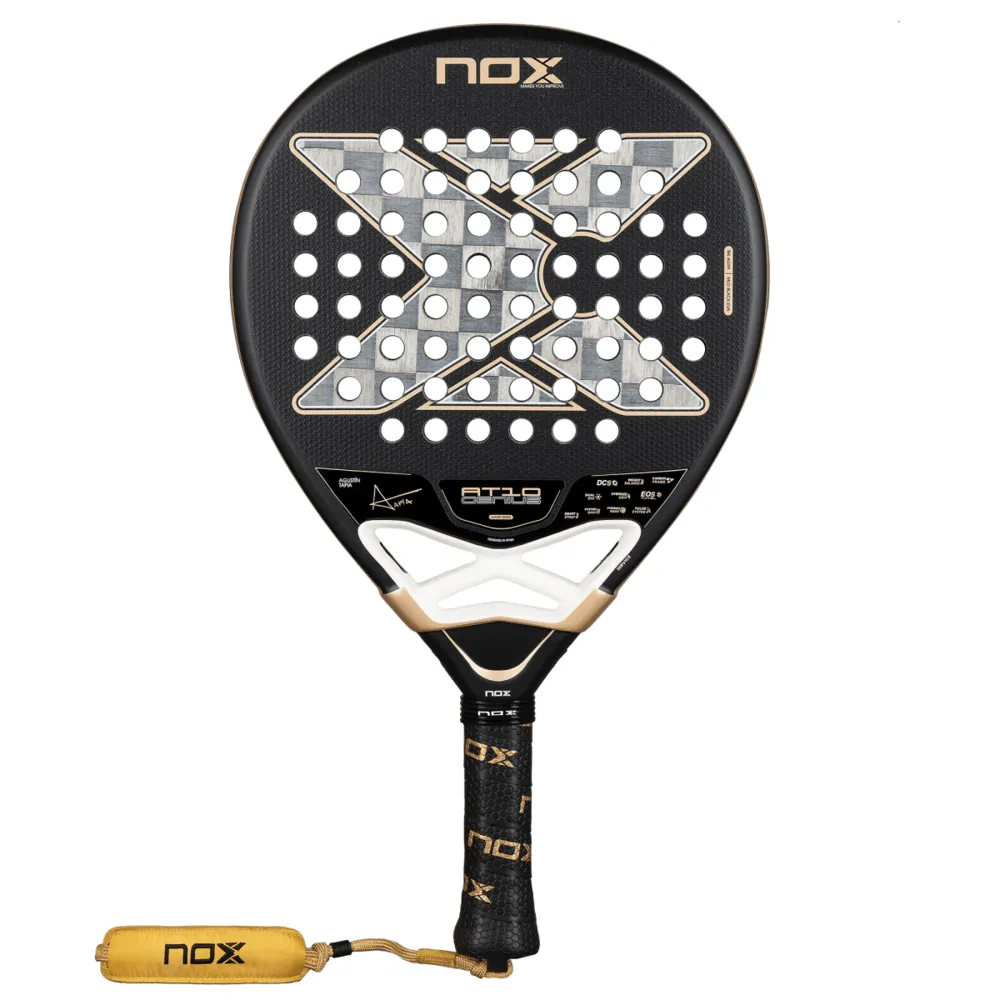 Image: NOX
The Genius 18K is the racket on this page that best matches what we tell most club players to look for: a neutral balance and a generous, centred sweet spot, rather than a heavy head. PadelShop measured one unit at 367 g with a low swingweight of 157, and calls it quick and forgiving for an advanced racket. For 2026 Nox gives it a new mould, adjustable 2 g and 4 g weight inserts, a new 3D-relief and fine-sand surface and, according to the reviewer, a noticeable spin improvement over the 2025 model. It is Agustin Tapia’s signature model.
- Neutral balance and a big centred sweet spot, the friendliest shape in this line-up
- Measured 367 g with a low swingweight, so it is quick
- New for 2026: new mould, 2 g/4 g weight inserts, more spin texture (PadelShop)
- The reviewer calls it a safe choice for players who have had padel elbow, which is an opinion, not a study
- Still an advanced racket: the reviewer says it is not for once-a-week recreational players
- Retailer review; a 2027 version may exist and we could not find one
- Brand pages disagree on the shape: teardrop or round
Bullpadel Vertex 05 27
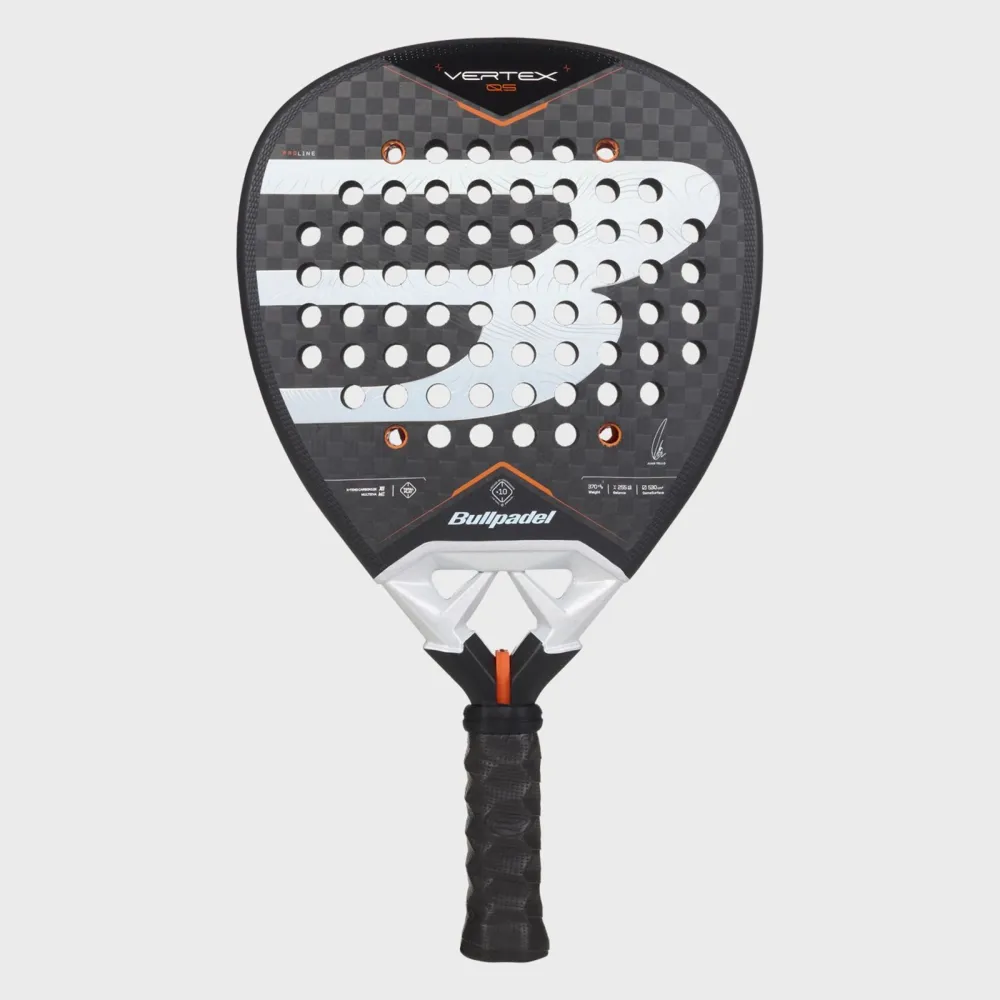 Image: Bullpadel
The Vertex 05 is Bullpadel’s all-court flagship, and the 27 is the 2027-season version, on sale now. What is genuinely new is small: the triangular Vertex Core5 frame heart replaces the previous double diagonal bridge and the sanded Top Spin finish returns, while the 12K carbon face over MultiEVA is unchanged. PadelVerdict calls it “a revision, not a revolution” and measured a medium balance of 255 mm and a lower swingweight than last year. We picked it for complete players who want a single racket that does a bit of everything.
- Balanced all-court character at medium balance
- New Core5 frame heart and Top Spin finish for 2027 (PadelVerdict)
- Lower swingweight than last year’s model on early bench data
- Only a modest update: PadelVerdict scored power and spin slightly lower than the 2026 model, and says part of that is a change to its scoring method
- PadelVerdict says it is not for pure finishers or players still developing their mechanics
- If you already own the 2026 Vertex 05 there is little reason to upgrade
Control and defence
A low-balance hybrid for players who defend and build points from the back.
Bullpadel Vertex 05 Hybrid 27
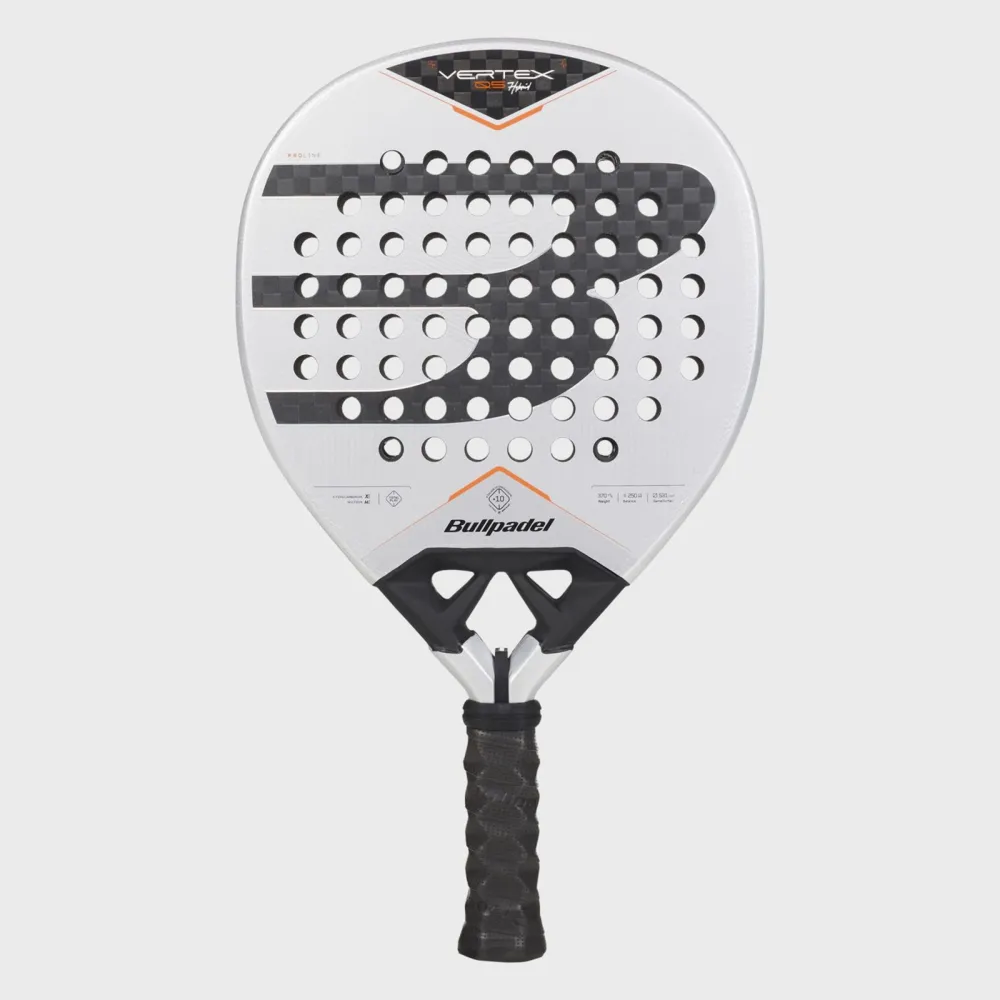 Image: Bullpadel
The control version of Bullpadel’s flagship family for the 2027 season, with the lowest balance of the Vertex range and a roomy hybrid face. A retailer describes a MultiEVA core that is firm on the outside and softer in the middle, new Vertex Core5 bridge, a Curv:Aktiv frame and an Air Power channel. One review site called the update only cosmetic. We picked it for advanced players who like to defend, build the point and keep the racket quick in the hand; independent testing of this exact model is still thin.
- Lower balance than the standard Vertex, which sits nearer your hand
- A big hybrid face for a pro-level racket
- New for 2027: Vertex Core5 bridge and Air Power channel (Padelmarket)
- A pro-level racket for a defensive player, not a beginner racket
- Independent testing of this exact model is thin; one review calls the update cosmetic
- Sold out at several retailers when we looked, so check availability
Power and attack
Diamond shapes with a high balance, for advanced players. Read the arm note further down before you choose one.
Bullpadel Hack 05 27
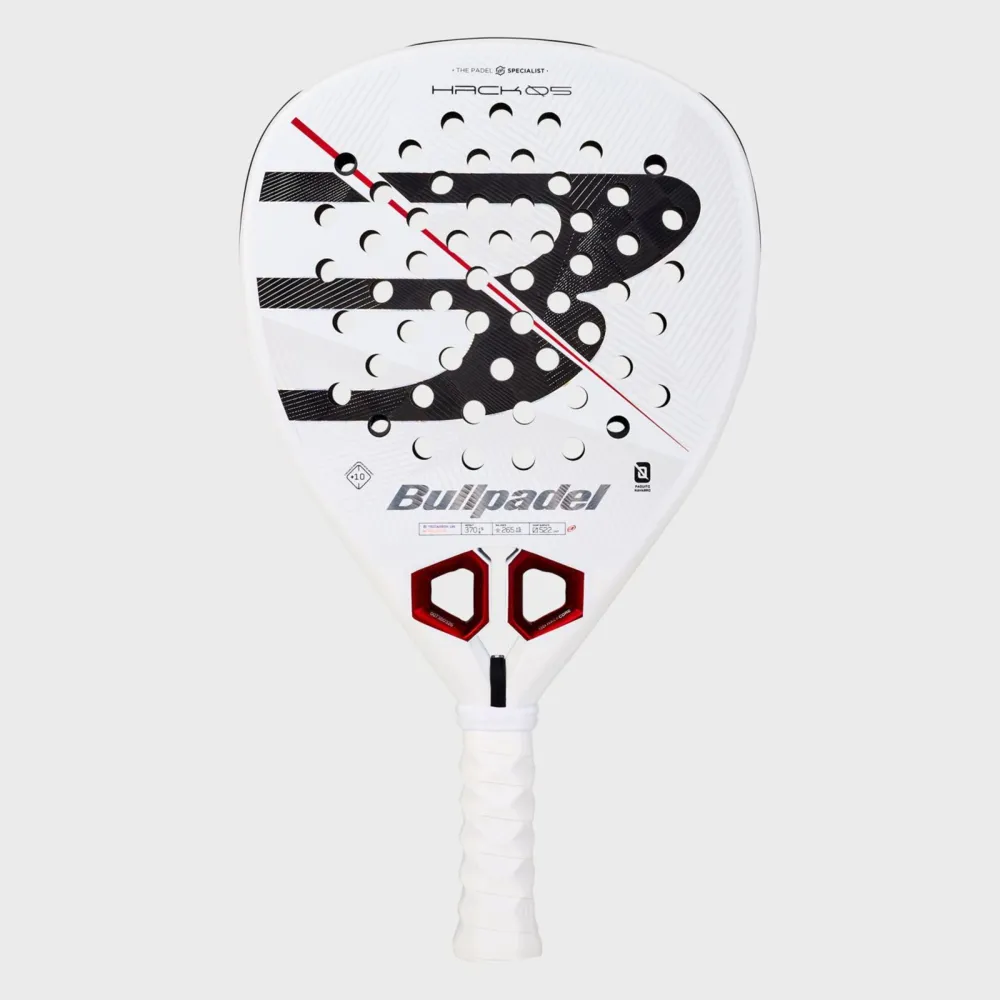 Image: Bullpadel
The Hack is Paquito Navarro’s racket and the Bullpadel for players who want to finish points. The 05 marks the line’s tenth anniversary and is new for the 2027 season with a redesign focused on aerodynamics: a fifth-generation Hack Core, an ExoAir frame and an Air Power channel. On paper the change from the Hack 04 is small, with the balance moving from 264 to 265 mm and the same Tricarbon 18K face with a different texture. It is a firm, small-faced diamond that rewards clean contact and loses pace on mishits.
- Built for smashes and finishing shots
- New for 2027: Hack Core 5, ExoAir frame, Air Power channel
- A direct line from the Hack range that Paquito Navarro plays
- Hard, high-balance and small-faced: low tolerance for mishits, not for beginners
- We would not suggest it with a history of elbow or wrist trouble
- Only retailer descriptions exist so far; no independent review of the 27
HEAD Coello 2026 Series

HEAD’s second exclusive Arturo Coello signature range went on sale on 12 February 2026, in Pro, Motion and Team versions. The Pro is HEAD’s most powerful and demanding; the Motion is “pure power with easier handling” for advanced players; the Team keeps the Coello look with a fibreglass face, which HEAD describes as the less stiff, more comfortable version. HEAD says the Pro is 5 g lighter than the previous generation, with a more reactive Power Foam and a new Soft Cap+. The Amazon link names only “HEAD Coello Padel Racket”, so check which of the three you are buying.
- Real power and stability; the Motion is the sensible Coello for most advanced players
- The Team is the one soft, fibreglass-faced option in this line-up
- A current 2026 range, not an old model
- The Pro is hard and heavy for a 38 mm diamond; PadelVerdict rates its comfort low and Padelful warns it can strain the elbow or wrist, so it is not for a returning or sore arm
- The Amazon title does not say Pro, Motion or Team
- We could not find what changed across the whole 2026 range, only the Pro changes HEAD states
adidas Metalbone HRD+ 2026
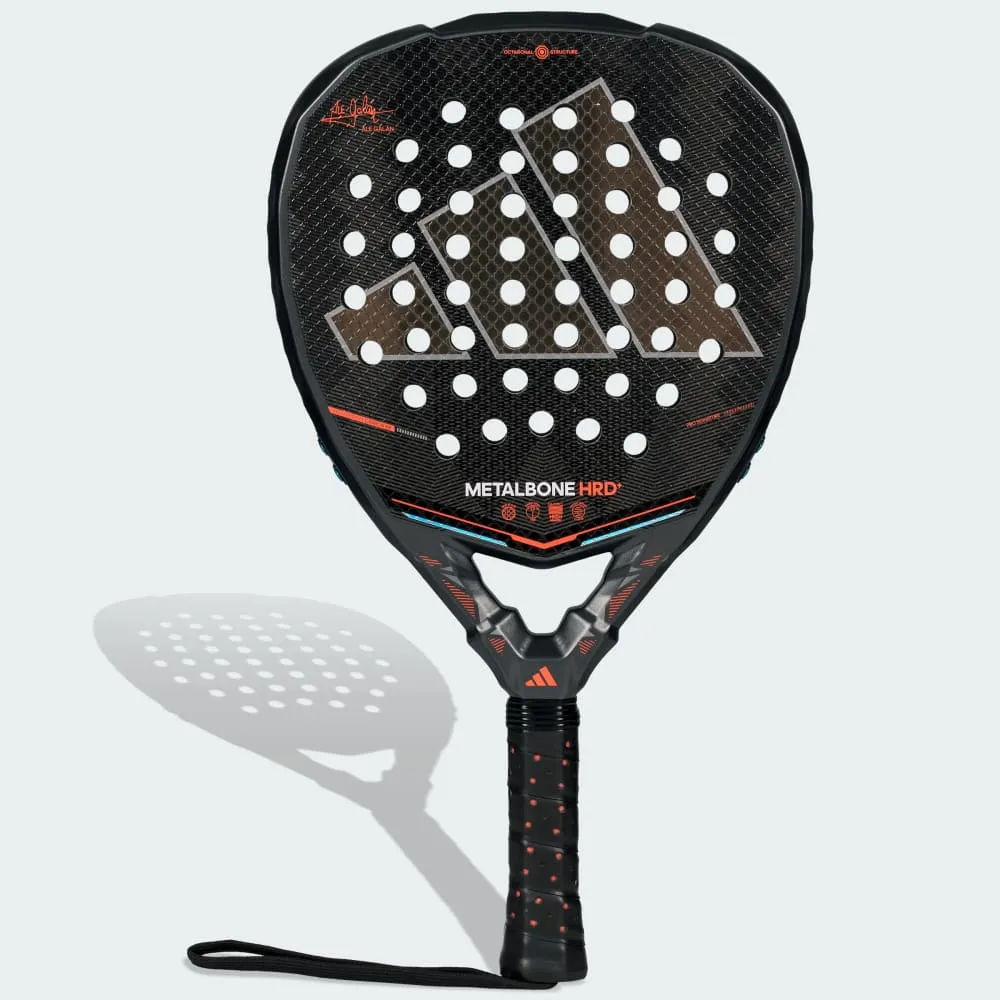 Image: adidas
Ale Galan’s Metalbone HRD+ is adidas’s hardest-core power racket, and at a listed 345-360 g it is lighter than most diamonds here, which helps swing speed. adidas copy says the 2026 version adds an Extra Power Grip with a longer handle, a faceted Low Poly structure in the core and frame, and a Power Groove side rail, although retailers disagree on which of these are genuinely new. We picked it for advanced attackers who want a firm racket that is not as heavy as the Coello Pro. Independent data on it is thin and we say so.
- Lighter than most power diamonds on this page
- Pro signature model (Ale Galan)
- adidas says the 2026 version adds a longer handle, Low Poly structure and a side rail
- Hardest adidas core and a high balance: not for a sore arm
- Sources conflict on the carbon face grade
- No independent tests found
Nox AT10 Genius Attack 12K Alum Xtrem
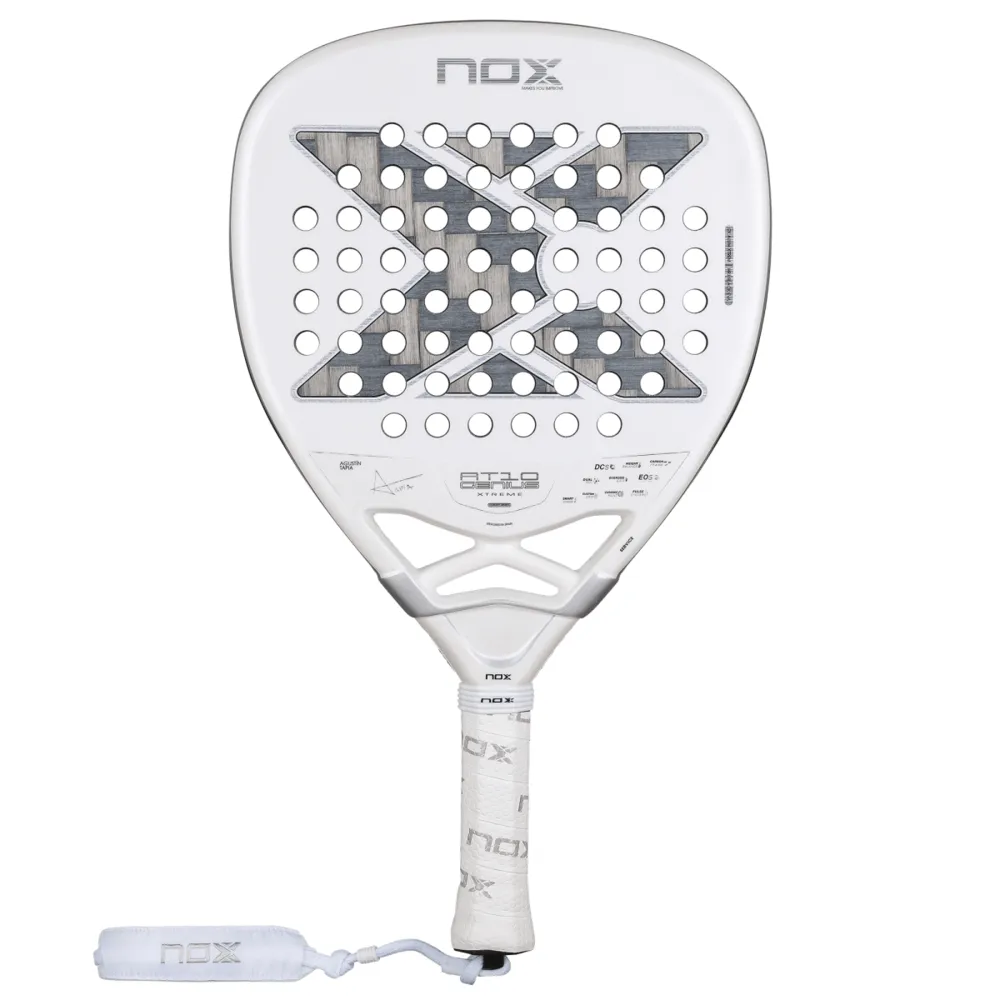 Image: NOX
The Genius Attack is Nox’s attacking Tapia model, and the 2026 version is firmer than before. PadelShop’s comparison with the 2025 model lists a stiffer 12K Alum Xtrem carbon face, a harder HR3 EVA core in place of the earlier MLD Black EVA, a new EOS Tunnel mould with side perforations, a slightly longer handle and adjustable 2 g and 4 g counterweights, plus photochromic paint. It suits advanced players who smash and volley hard. It is the opposite character to the 18K Genius, which is why both are here: pick the Genius Attack to attack and the 18K to stay comfortable.
- Firm, direct response for hard hitters
- Clear 2026 changes vs 2025: stiffer face, harder core, weight system (PadelShop)
- Retail prices are often lower on older-season stock, a retailer claim worth checking
- Firmer face and harder core than 2025, so not the racket for a sensitive arm; take the 18K Genius instead
- No independent review found
- A 2027 version may exist and we could not find one
Which of These Fits Your Level?
An honest note: most of the seven are advanced rackets
What we tell most club players
For most club players we suggest a mid-range round or teardrop racket with a soft EVA core at roughly 355 to 375 g, because that combination is the most forgiving. Of the seven, only the Nox Genius 18K fits that description reasonably well. The Vertex 05 27 suits complete players and strong intermediates according to PadelVerdict. The Hack 05 27, Genius Attack, Metalbone HRD+ and Coello Pro are firm diamonds for advanced attackers. The Coello Team, if that is what the Amazon link opens, is the softer, fibreglass-faced Coello.
If you are still learning
If you are new to padel, none of these is the racket we would start you on. A round shape, a low balance and a soft core are easier to play with at the start, and we explain them, with candidates, on our beginner racket page. If you are coming back from arm trouble, our tennis-elbow racket page covers what the evidence does and does not say.
Older seasons
Four of the seven are 2026 models, the three Bullpadels are 2027, and we found no 2027 version of the Nox or adidas rackets. A retailer says last year’s models are often heavily discounted when the new range launches while the technology changes little, and that sizes and weights can sell out (Padelmarket). That is a seller’s claim, so check the live Amazon price rather than assume a saving. PadelVerdict says the Vertex 05 changed little from 2026 to 2027, so a discounted 2026 Vertex would be a reasonable thing to compare.
How to Choose a Padel Racket
Shape, balance, core and weight
Shape: round, teardrop or diamond
Retailer buying guides agree on the basic split: a round racket has a large, central sweet spot and is the most forgiving, a diamond puts the weight in the head for power and demands cleaner contact, and a teardrop sits in between. This is common retailer guidance rather than a controlled study, and two rackets of the same shape can feel very different, so use it as a starting point.
Balance, core and face
A higher balance puts weight in the head, which adds power and makes the racket harder to swing; a lower balance keeps weight near your hand, which favours control and speed at the net. A softer EVA core gives a more cushioned touch than a firm one, and a fibreglass face is more flexible than a carbon face, although the stiffness numbers brands and sellers publish are not on a common scale. Treat balance, core and face as feel, and expect to have to try before you decide.
Weight
Most of the rackets here are listed at about 345 to 375 g. HEAD itself says its rackets vary by 10 g either side of the stated weight, so a listed weight is a range. A heavier racket adds power but costs you in the arm and shoulder over a long match; a lighter one is quicker but gives less for free. If you are small, play occasionally or have arm trouble, the lighter end is the safer choice. Padel rackets have no strings, so string tension and tennis-style dampers do not apply here.
Racket Choice and Your Arm
What the evidence shows, and what it does not
No study links a racket feature to padel elbow
We found no trial or review showing that changing a padel racket’s weight, balance or core reduces padel elbow. What we do have is advice from clinics, coaches and reviewers that a lighter, lower-balance racket with a larger sweet spot is kinder when your arm is sore, and a review in the Aspetar Sports Medicine Journal (Eirale and de Gasperis, Injuries in Padel) that lists wrong equipment and a recent change of equipment as risk factors, while noting the literature on elbow injuries is contradictory. Hard, head-heavy diamonds are the opposite of that advice, and one review site warns that the Coello Pro can strain the elbow or wrist. Read this as advice, not proof.
A new racket is not a treatment. Persistent or worsening pain should be assessed by a clinician. Our padel elbow guide covers what it is, rehab and when to see someone, and our elbow support page covers a brace as a short-term aid.
Buying Tips
Before you spend
Try before you buy
If your club or a local shop has demo rackets, hit with one before you commit. Feel is the deciding factor and no spec sheet captures it.
Read the Amazon title
Several of our links have a title that does not match the model name exactly. Confirm the model, variant and season on the page.
Check the weight range
Listed weights have a tolerance of about 10 g. If weight matters to your arm, pick the lighter end and check the listing.
Fit the grip
If you are between sizes, a thinner handle plus an overgrip is easy to adjust. See our guide to padel overgrips.
Change gradually
A sports medicine review lists a recent change of equipment as a risk factor for elbow overuse, so build up play time on a new racket.
You know the feeling: the racket looks perfect on the shelf and then feels like a plank in your hand by the second set. Most players don’t realise how much of that is level fit, not brand. What actually works is picking the racket your game and your arm can handle today, and we have been through the other way and it hurts.
Who This Is For
Advanced and improving players choosing a current-season racket
Club players who want to know which of seven is the friendliest
Shoppers who want the Amazon title, level and arm-comfort caveats stated up front
Frequently Asked Questions
What does “27” mean in a Bullpadel racket name?
It means the 2027 season. Retailers label these rackets 2027 and they are the current range, on sale now.
Which of these rackets is best for a club player?
The Nox AT10 Genius 18K is the friendliest of the seven: a neutral balance, a measured 367 g and a generous sweet spot. The others are mostly advanced rackets.
Are any of these good for a beginner?
Not in our view. A round shape, a low balance and a soft core are easier to start with. See our beginner racket page.
Is a hard racket bad for padel elbow?
We found no study that shows it. Clinics and reviewers commonly advise a lighter, lower-balance, softer racket when your arm is sore, and a recent change of equipment is listed as a risk factor. Persistent pain needs a clinician.
Which Coello does the Amazon link open?
The Amazon title says only “HEAD Coello Padel Racket”, so open the listing and read whether it is the Pro, Motion or Team before buying.
Is the older-season racket the better buy?
A retailer says last season’s models are often discounted while the technology changes little. That is a seller’s claim, so check the live price and compare shape, balance and face between the two seasons.
Keep Reading
Build Your Full Recovery Plan
Padel Elbow
Diagnosis, causes, and what is actually happening in your body.
Recovery Hub
Post-match recovery, sleep, nutrition, and return-to-play.
Prevention Hub
Warm-up, mobility, strengthening — stop injuries before they start.
Elbow Supports
The gear that actually helps — picked and explained.

